
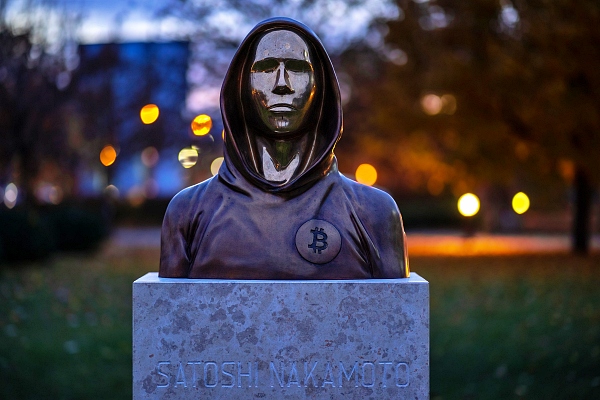
As a view grows that bitcoin is no longer easy to explain through existing asset classes, a short message left 16 years ago by Satoshi Nakamoto (사토시 나카모토) is drawing attention again.
According to blockchain media outlet U.Today on July 5 local time, Satoshi said on the BitcoinTalk forum on July 5, 2010, as he continued discussions on the Bitcoin beta 0.3 release and price, that "explaining bitcoin to the general public is difficult" and that "there is nothing to compare it to."
The remark was then closer to a technical comment, but markets are now reinterpreting it alongside debate over bitcoin's nature. That is drawing attention as existing frames for seeing bitcoin either as a volatile technology stock or as defensive digital gold have run into limits.
More recently, attempts have emerged to define bitcoin in a new way in line with that trend. Michael Saylor, who leads Strategy, proposed the term "digital capital" in a manifesto he recently published, saying he would not measure bitcoin by old asset-class frameworks. The approach is that bitcoin should be viewed through its own structure and supply rules rather than comparisons such as technology stocks or gold.
Satoshi also rejected a direct link between bitcoin's valuation and energy costs at the time. He said, "Bitcoin is not stable in its relationship with energy" and "is not connected to energy costs." This is seen as an early emphasis that bitcoin's value cannot be fixed by mining electricity costs or production costs alone, and that the final price is ultimately formed by market demand and supply.
The way markets view bitcoin is also moving in that direction. With bitcoin trading around $63,000, capital inflows are being calculated based on a 21 million issuance limit. Network stability is measured by whether hash rate records are being renewed, and long-term value is judged by the issuance schedule embedded in the code, it says.
In the process, attention is also being drawn to the point that its supply structure does not change for the convenience of regulators or traditional finance. The trend of interpreting bitcoin through the protocol's mathematical structure and network indicators, rather than simply comparing it with Apple stock or gold bars, has strengthened.
Against this backdrop, a short forum post from 2010 is being read again as a message showing bitcoin's current market position. The uniqueness that was hard to explain early on has now become a core standard for assessing bitcoin, and markets are gradually treating bitcoin not as a variation of other assets but as a separate asset that moves by its own rules.
This renewed attention shows a trend of evaluating bitcoin by its own supply structure and network rules rather than by similarities with other assets. The key point is that Satoshi's early sense of the issue aligns with how markets assess it today.
 Yoonseo Lee
yslee@d-today.co.kr
Yoonseo Lee
yslee@d-today.co.kr