
The centre of gravity in AI competition is shifting from model development to securing semiconductors.
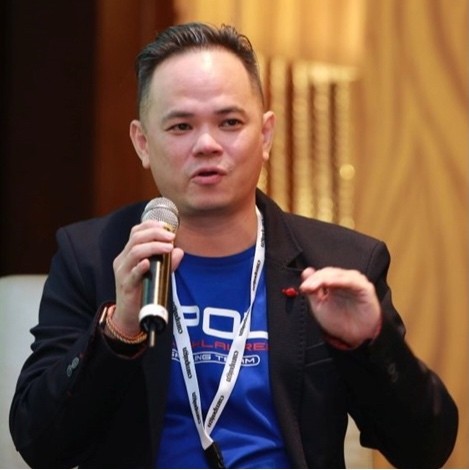
Alvin Foo (푸), a venture partner at Zero2Launch, made clear in a recent post on X that the key in the AI race is chips, not making bigger models.
According to him, Amazon, Google, Microsoft and Meta are pouring billions of dollars into developing their own AI chips. Using in-house designed chips instead of buying GPUs externally can cut AI infrastructure costs by 30 to 40 percent.
The rise of inference workloads, beyond training, is also boosting the strategic value of chips.
Foo said, "Inference is the process in which a trained AI model answers real questions or performs tasks. By 2030, the number of tokens processed per day by AI systems is expected to reach 10 quadrillion, and most of that will be inference. There is no choice but for the direction of AI infrastructure design itself to change." He added, "If you are only looking at models, you miss where the real competition is happening."
According to him, the side that wins the AI competition going forward will not be the one that makes the smartest models, but the one that controls the full stack, from semiconductors, data centres and cloud infrastructure to AI operating systems, agents and enterprise workflows.
He repeatedly emphasised that "the AI economy is moving from a software revolution to an infrastructure revolution."
Nvidia still leads the AI chip market. But Nvidia's market share is slowly declining as big tech companies adopt their own ASICs alongside Nvidia GPUs.
Anthropic's 10-year long-term contract related to AWS Trainium AI chips is in the same context. It was not simply a decision about which chip to use, but a long-term judgement that survival requires holding the entire AI infrastructure directly, Foo said.
Cloud providers are cementing their position as AI infrastructure suppliers. Large-scale computing contracts signed by OpenAI and Anthropic are building up infrastructure order backlogs worth hundreds of billions of dollars for Microsoft, Oracle, Google and Amazon.
The semiconductor landscape is also changing. Foo said, "By the late 2030s, the United States is expected to directly account for 30 to 35 percent of global output of advanced semiconductors (5 nanometres or less). It is a direction aimed at reducing reliance on overseas production and increasing AI infrastructure self-reliance."
 Chi-gyu Hwang
delight@d-today.co.kr
Chi-gyu Hwang
delight@d-today.co.kr