
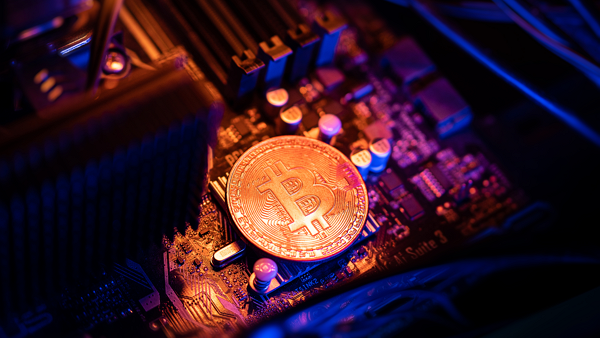
Bitcoin has recorded a 30 percent "quantum discount" for the first time, making quantum-computing risk a key market variable. In contrast, spot bitcoin ETFs have seen net inflows of $727 million over the past five trading sessions, showing a mixed picture as institutional funds continue to flow in.
According to blockchain media outlet U.Today on July 21, the bitcoin quantum discount rate stood at 30 percent based on Capriola Investment's proprietary model. That means that while bitcoin's current market price is about $65,472, it is trading 30 percent below the fundamental value calculated by the model as it factors in quantum-computing risk. The discount rate, about 28 percent in early summer, has widened further to a record high.
What has fueled market anxiety is progress in quantum-computing technology. Investor caution also increased after Google Quantum AI assessed that advances in algorithms capable of breaking the secp256k1 elliptic curve used in bitcoin encryption are moving faster than expected.
The slow response from the bitcoin developer community is also a burden. Some have even floated a plan to forcibly freeze long-dormant wallets, including about 1 million BTC attributed to Satoshi Nakamoto, but Bitcoin Core developers are drawing a line against that.
Charles Edwards of Capriola Investment urged developers to disclose an actual response plan. Grayscale, in contrast, maintains that market worries are excessive. Citigroup warned of a "Harvest Now, Decrypt Later" strategy in which hackers collect blockchain data now and decrypt it in the future when quantum computers emerge.
Private companies are moving to respond preemptively. Galaxy Digital launched a $5 million "quantum readiness" programme to prepare for the era of Shor's algorithm, and an advisory group at Coinbase also argued that the transition to quantum-resistant cryptography should be accelerated. Project Eleven forecast that quantum computers capable of threatening modern cryptographic systems could emerge between 2030 and 2033.
Despite quantum risk, institutional buying continues. U.S. spot bitcoin ETFs saw total net inflows of $727 million over the past five trading sessions, including $227 million in a single day on July 20. On the same day, spot ethereum (ETH) ETFs also received $38 million.
Within the bitcoin community, debate continues over the BIP-110 upgrade. Developers of Bitcoin Knots, which runs about 23 percent of all nodes, want to limit OP_RETURN data to 83 bytes to reduce spam transactions, NFT inscriptions and inflows of meme tokens. Michael Saylor strongly opposed it, calling it "censorship and monetary purity imposed from above."
Some signs of recovery appeared in altcoins. According to on-chain analytics firm Santiment, XRP's 30-day MVRV indicator moved back above 0, meaning investors who bought over the past month have entered a slight profit zone. ETH, Cardano (ADA) and Chainlink (LINK) showed a similar trend.
Still, some assessments say it is too early to conclude XRP has shifted into a full-fledged uptrend. XRP is holding the $1 support line, but faces selling pressure near the short-term resistance around $1.1459. Another analysis says a break above $1.4159 is needed for a long-term trend reversal.
In Shiba Inu (SHIB), whale accumulation near lows has been detected. According to Arkham Intelligence, about 645.9 billion SHIB (about $2.76 million) and 162.4 billion SHIB (about $670,000) were withdrawn in succession from Coinbase Prime to new wallets. When tokens move off exchanges, circulating supply falls, which is typically interpreted as a signal of long-term holding.
The biggest market variable this week is U.S. jobs data. With initial jobless claims due on July 23 potentially affecting the Federal Reserve's interest-rate outlook, the market is expected to watch the quantum-security dispute, ETF fund flows and U.S. economic indicators at the same time.
 Jinju Hong
hongjj@d-today.co.kr
Jinju Hong
hongjj@d-today.co.kr