
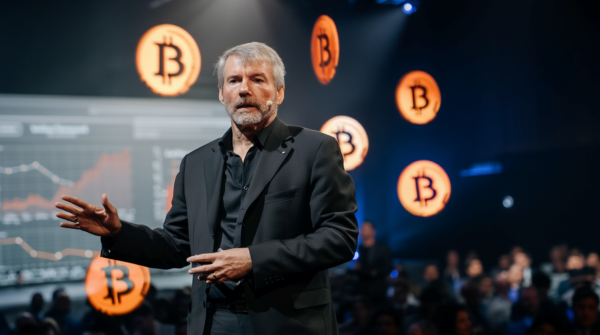
Michael Saylor has publicly opposed BIP-110, a proposal to limit non-monetary transactions on the Bitcoin network.
On July 19, blockchain media outlet Cointelegraph reported that Saylor presented "110 reasons why BIP-110 is a bad idea" on social media.
The dispute centres on how much to restrict NFT-like data such as Ordinal inscriptions and arbitrary data recording on the Bitcoin network. BIP-110 was proposed in December 2025. It was designed to keep Bitcoin's core use as a peer-to-peer electronic cash system and block non-monetary data entries that disrupt the network.
He said he respects why many Bitcoin developers support BIP-110. He also said goals such as maintaining verification accessibility, reducing node operators' costs and the burden of unwanted content, preserving an inexpensive payment method, and Bitcoin's role as sound money are important issues. But he said, "I sympathize with the goal, but I do not agree with the solution."
Saylor stressed "neutral rules, strong consensus, an open market and permissionless innovation" as an alternative. He argued that filtering out certain types of transactions through network-level restrictions does not fit Bitcoin's operating principles.
The controversy is seen as one of the most visible protocol conflicts in the Bitcoin developer community since the block size war that ran from 2015 to 2017. At the time, the broader ecosystem clashed over whether to raise the block size limit for scalability and whether to accept the risk of a chain split.
BIP-110 was proposed by an anonymous developer named Daton Ohm, and is supported by Ocean Protocol founder Luke Dashjr. Opponents include Blockstream CEO Adam Back. He said, "Bitcoin's decentralization means not forcing your viewpoint on others," and argued that this approach does not align with Bitcoin's cypherpunk spirit of censorship resistance and permissionless money.
Supporters, including Luke Dashjr, call the blockchain bloat caused by Ordinals a "serious threat" to the network and say a rapid response is needed. They said BIP-110 will not cause a chain split despite many concerns. They also said it is a temporary fork with a one-year limit, and is not structured to invalidate fee-paying transactions over the long term.
Still, the hurdle to actual activation is high. BIP-110 would apply only if more than 55 percent of Bitcoin block validation nodes support it for a single block period. In the 475th period, from block 955,584 to 957,599, the support rate was 1 percent. The share of Bitcoin nodes running BIP-110 has risen above 2 percent, but it remains far from the activation threshold.
As the debate grows, Ordinal activity has instead fallen sharply. Over the past month, the daily number of Ordinals inscribed on the Bitcoin blockchain has been below 10,000, down sharply from more than 400,000 at its peak in August 2023. The debate continues over whether protocol-level restrictions are needed even as the direct cause of network congestion has weakened.
As a result, discussion of BIP-110 is increasingly likely to extend beyond a simple anti-spam issue into a dispute over which transactions to allow on Bitcoin and how far network neutrality should go.
Many Bitcoiners I respect support BIP 110. I understand and share their desire to protect Bitcoin, but believe the proposed cure is more dangerous than the condition. Here are 110 reasons why Bitcoin needs guardians of neutrality. https://t.co/hOAqfAgC58
 Yoonseo Lee
yslee@d-today.co.kr
Yoonseo Lee
yslee@d-today.co.kr