
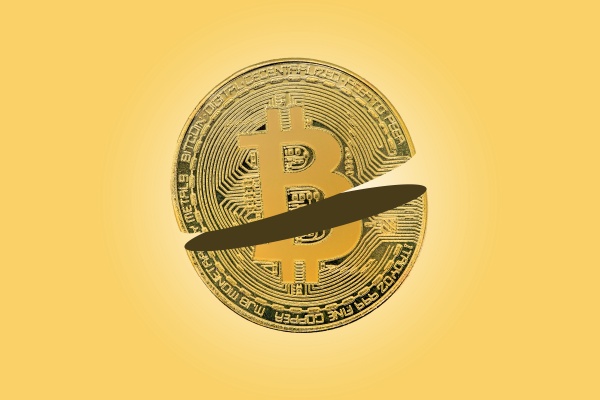
With the number of blocks remaining until bitcoin's next halving falling below 100,000, market interest is rising again in long-term changes to its supply structure.
On May 19 local time, blockchain media outlet CoinPost reported that the next bitcoin halving is expected around April 2028 at block 1.05 million. At that point, the block reward will be cut in half to 1.5625 BTC from 3.125 BTC.
A halving is a core bitcoin mechanism designed to reduce mining rewards by 50 percent about every 210,000 blocks, or about 4 years. It lowers the pace of new supply and reinforces scarcity.
In the 2024 to 2028 cycle, bitcoin's annual inflation rate is estimated at about 0.85 percent. For the 4 years after the 2028 halving, that figure is forecast to fall to about 0.4 percent. With supply growth slowing further, long-term scarcity strengthens.
Profitability pressure on the mining industry is expected to intensify. If a rise in the bitcoin price does not offset the halving of rewards per block, the possibility is being raised that miners with weaker economics may exit the market first.
Markets are also watching price moves after halvings again. Past post-halving price action shows a pattern in which a bull market typically peaks within 12 to 18 months. The size of gains has also gradually slowed as cycles repeat. More recently, some analysis says the traditional four-year cycle may not work as strongly as it did in the past due to the launch of spot ETFs and inflows from institutional investors.
In the previous cycle, bitcoin rose above $60,000 for the first time after the May 2020 halving as the COVID-19 shock coincided with expanding global liquidity. Strategy's (formerly MicroStrategy) bitcoin purchases and Tesla's announcement of an investment are also cited as factors that strengthened the uptrend at the time.
Market conditions around the two most recent halvings were also very different. Just before the May 2020 halving, bitcoin prices plunged at one point due to the COVID-19 pandemic shock, but it entered the halving as markets recovered after monetary easing in many countries. Strategy later began a bitcoin treasury strategy under the name MicroStrategy at the time, and Tesla also announced a plan to buy bitcoin, as bitcoin rose above $60,000 for the first time in the 2021 bull market.
The most recent halving was in April 2024. At the time, bitcoin traded around $63,800. Spot bitcoin ETF trading began in the United States for the first time in January that year, and as institutional participation expanded, bitcoin hit a record high above $120,000 in 2025. Markets later went through a correction due to the impact of Trump tariff shocks and the Middle East situation, but the current cycle is still continuing.
May 22 marks the 16th anniversary of 'Bitcoin Pizza Day'. It refers to a 2010 purchase in which programmer Laszlo Hanyecz bought two pizzas for 10,000 BTC, and the deal's value, about $0.0025 at the time, now totals about $770 million based on current levels.
Hanyecz later said in an interview that he does not regret the deal. Looking back, he said, "My hobby could buy dinner," and "That day felt like I had won on the internet." He also continued exchanging bitcoin for pizza after the transaction until Aug. 4, 2010, and was reported to have sent more than 79,000 BTC from his wallet.
With the halving countdown accelerating, markets are watching how the impact of reduced supply and expanded ETF-based demand will change future price moves. Through the period until the 2028 halving, a reshaping of the mining industry and institutional fund flows are expected to act as key variables.
 Jinju Hong
hongjj@d-today.co.kr
Jinju Hong
hongjj@d-today.co.kr