
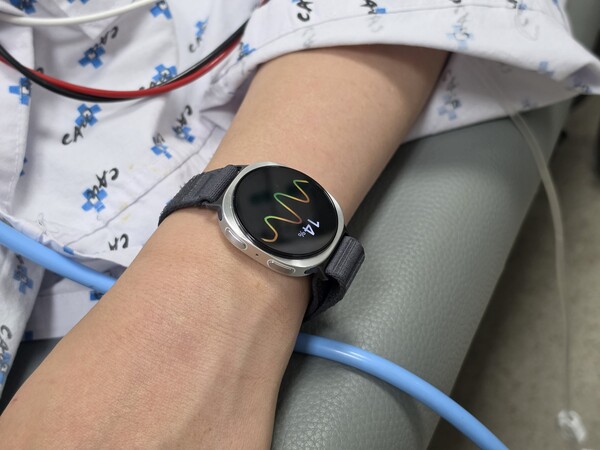
Samsung Electronics said on Wednesday it has, for the first time in the world, proven through a joint clinical study with Chung-Ang University Gwangmyeong Hospital that a Galaxy Watch can predict vasovagal syncope early. The findings were published in the latest issue of European Heart Journal-Digital Health, a digital health journal published by the European Society of Cardiology. This is the first time a smartwatch has been shown to be able to predict syncope.
Vasovagal syncope (VVS) is a phenomenon in which blood pressure drops sharply due to excessive tension or stress, causing temporary loss of consciousness. It can lead to unexpected falls and cause secondary injuries such as fractures and cerebral hemorrhage, requiring caution. Lifetime cumulative prevalence reaches 40 percent, and one-third of those experience recurrent syncope.
A research team led by Professor Jun-hwan Jo (조준환) of the Department of Cardiology at Chung-Ang University Gwangmyeong Hospital conducted a head-up tilt test on 132 patients suspected of vasovagal syncope while they wore a Galaxy Watch6. A head-up tilt test is used to determine, by reproduction, whether the cause of syncope or near-syncope dizziness lies in the autonomic nervous system.
The team collected patients' heart rate variability (HRV) data in real time using the photoplethysmography (PPG) sensor built into the Galaxy Watch6 and analysed it with an AI algorithm. It then succeeded in predicting signs of vasovagal syncope about 5 minutes before it occurred with 84.6 percent accuracy. If signs of syncope are predicted, patients can secure a "golden time" to take a safe posture themselves or ask for help from those around them.
Jun-hwan Jo said real-time detection of syncope risk would be a major help in preventing accidents for patients who find it difficult to feel warning symptoms. Jong-min Choi (최종민), a managing director in the Digital Health Team of Samsung Electronics' MX Business, said the study showed the possibility of shifting healthcare from post-event management to prevention through wearable technology. He said Samsung Electronics will work to provide preventive healthcare solutions on the Galaxy Watch based on the results.
Samsung Electronics plans to continue expanding cooperation with major medical institutions to advance the health monitoring functions of wearable devices and broaden the digital health ecosystem. Samsung Electronics also provides health insights such as sleep, exercise, antioxidants and cardiovascular health through the Galaxy Watch. The Galaxy Watch8 released last year was the first smartwatch to include an antioxidant index feature, measuring carotenoid levels, an antioxidant in the body, in 5 seconds to support improved dietary habits.
 Dae-geon Seok
d2dg@d-today.co.kr
Dae-geon Seok
d2dg@d-today.co.kr