
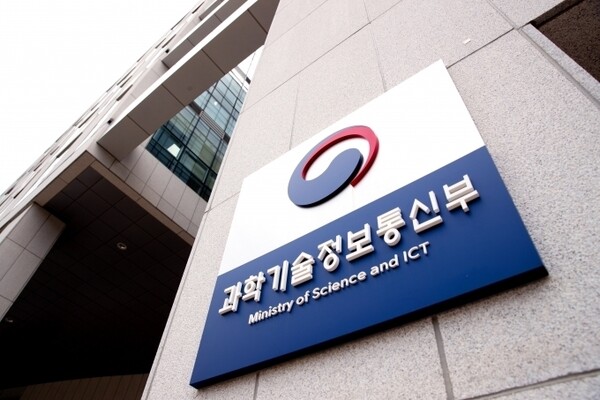
South Korea's Ministry of Science and ICT said on Tuesday it has begun expanding pilot transitions to post-quantum cryptography (PQC) and starting commercial technology development (R&D) for key national infrastructure including telecommunications, finance, transport, defense and space.
PQC is a next-generation encryption technology designed to be difficult to decrypt even with quantum computers, using a more complex mathematical structure than currently used public-key cryptographic algorithms. The project is broadly divided into support for pilot transitions and technology development.
The pilot transition support applies PQC to key national infrastructure to analyse technical problems and solutions and to derive a pilot model that establishes migration procedures. The technology development effort goes beyond a simple pilot application, focusing on securing core technologies that automatically identify vast vulnerable cryptographic assets in systems and support the entire process through cryptosystem conversion, operation and stability verification.
The ministry and the Korea Internet & Security Agency (KISA) will expand support this year to 5 key areas — telecommunications, finance, transport, defense and space — based on pilot transition experience last year in 3 major areas: healthcare, energy and administration.
In telecommunications, a Dream Security-led consortium will apply PQC to the Korea Research Environment Open Network (KREONET) operated by the Korea Institute of Science and Technology Information. In finance, a CaseMatek-led consortium will pilot a transition of Hana Card's overall card payment infrastructure to a PQC system. In transport, a MobilWithers-led consortium will introduce PQC to next-generation intelligent transport system infrastructure operated by Gyeonggi Province and the Korea Road Traffic Authority in Pangyo Zero City.
In defense, a Daeyoung S-Tech-led consortium will carry out a PQC pilot transition for the Ministry of National Defense's smart unit integrated platform. In space, a Ksign-led consortium will pilot a transition of Contec's satellite communications infrastructure cryptosystem to a PQC system.
The ministry and the Institute of Information & Communications Technology Planning & Evaluation (IITP) will 추진 a nationwide core technology development project for PQC transition for 5 years from this year through 2030. This year, it will begin 4 new tasks in transition, verification and foundational technology.
The Ksign-led consortium will develop a PQC self-transition and integrated management platform. It will build a DevOps-based self-transition open platform that provides integrated management from cryptographic asset detection to automated transition and operational monitoring. A consortium led by the Electronics and Telecommunications Research Institute will develop PQC optimisation technology for ultra-lightweight hardware.
A consortium led by the National Security Research Institute will develop technology to evaluate PQC implementation accuracy and safety to introduce PQC into South Korea's cryptographic module validation programme (KCMVP). A consortium led by Daegu Gyeongbuk Institute of Science and Technology will implement a hybrid security system combining PQC and quantum key distribution (QKD) in a parallel mode and verify performance and safety.
Lim Jeong-gyu (임정규), director general for information security network policy at the ministry, said, "The development of AI and quantum technology is emerging as a major cybersecurity threat to cryptosystems." He added, "Quantum security is no longer a choice but an essential core task to protect national security and the daily lives of the people."
 Jin-ho Lee
jhlee26@d-today.co.kr
Jin-ho Lee
jhlee26@d-today.co.kr