
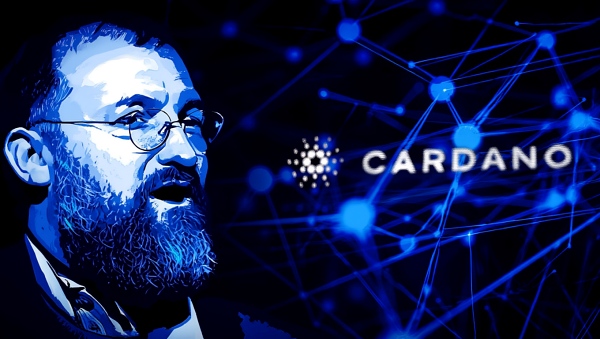
Charles Hoskinson, founder of Cardano (ADA), warned there is more than a 50 percent chance quantum computers will become a practical threat to cryptocurrencies before 2033.
On May 17 (local time), blockchain media outlet BeInCrypto reported that Hoskinson said the quantum computing risk should be seen not as a distant theoretical possibility but as a technical deadline that requires action starting now.
Cardano is pushing a transition to lattice-based cryptography. Hoskinson said, "I think there's a better than 50 percent chance that by 2033, there will be a working commercial quantum computer at scale." He added, "We're working on lattices, but the federal standards have already been applied. We know how to protect ourselves."
The core issue is the elliptic-curve signature schemes used by major blockchains today. With sufficient quantum processing power, Shor's algorithm could be used to derive private keys and forge signatures, which could undermine distributed ledger consensus structures. Hoskinson pointed to hardware progress using neutral-atom approaches and government-backed indicators such as the U.S. Defense Advanced Research Projects Agency's (DARPA) quantum benchmarking initiative as factors that are bringing the threat forward.
The possibility of a "harvest now, decrypt later" attack, in which encrypted data stored today could be decrypted later, was also raised. That means even if quantum computers have not yet been commercialised, data exposed or accumulated now could become targets of future attacks.
The concern is not limited to Cardano. It was also noted that Bitcoin has large holdings at addresses with exposed public keys in a potentially vulnerable state. Hasib Qureshi, managing partner at Dragonfly, said the midpoint estimate for when modern public-key cryptography is decisively broken is about 10 years, while noting the timeline could be pulled forward.
Cardano's response focuses on lattice problems, particularly the Learning With Errors (LWE) family. This approach is cited as a candidate that can withstand both classical and quantum attacks. The development roadmap is expected to reflect the U.S. National Institute of Standards and Technology's (NIST) post-quantum cryptography standards. These include ML-KEM under FIPS 203, ML-DSA under FIPS 204 and SLH-DSA under FIPS 205, and a FALCON-based signature standard is also being developed as an additional alternative.
Hoskinson said Cardano is relatively well positioned in terms of the difficulty of a network transition. Cardano plans to soon release a research proposal related to quantum resistance, and community-level strategic voting is already under way.
Solana is moving in a similar direction. The Solana Foundation said it assessed its level of quantum preparedness with Project Eleven. It said, "Quantum computers are not here yet, but we're preparing for the possibility," adding, "As a first step, we've deployed post-quantum signatures to the Solana testnet." The trend suggests major blockchains recognise shared mathematical vulnerabilities and are testing response measures.
Still, whether the 2033 deadline becomes reality depends on the pace of hardware advances and on progress in error correction and fault tolerance. Those challenges have not yet been solved. What the industry needs to focus on now is not the commercialisation date itself, but how prepared it is to replace existing cryptographic systems, and when and how it will do so.
UPDATE: Charles Hoskinson says "I think there's a better than 50% chance that by 2033, there will be a working commercial quantum computer at scale. We're working on lattices, but the federal standards have already been applied—FIPS 203 to 206. We know how to protect ourselves." pic.twitter.com/vYmohOlUBK
 Yoonseo Lee
yslee@d-today.co.kr
Yoonseo Lee
yslee@d-today.co.kr