
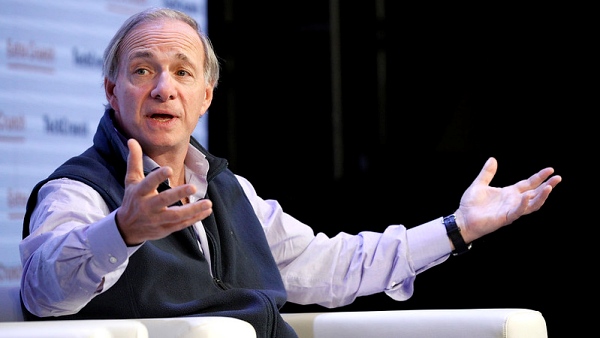
Billionaire investor Ray Dalio said bitcoin’s public ledger characteristics are a factor that blocks central banks from adopting it as a reserve asset.
CoinDesk reported on May 12 that Dalio said on X, formerly Twitter, that bitcoin has limits on privacy, making central banks reluctant to hold it.
“Bitcoin lacks privacy. Transactions can be monitored and can potentially be controlled, which is why central banks don’t want to hold it,” he said. Bitcoin is a decentralised network based on a public ledger, with all transaction records permanently stored on the blockchain. Wallet addresses are not directly linked to real names, but blockchain analytics firms or investigative agencies can trace the flow of funds and connect it to individuals or institutions.
That also aligns with the transparency that bitcoin supporters have presented as a strength. But for central banks, the possibility that the reserve accumulation process and fund flows could be revealed on a public ledger in near real time could be a burden. At Consensus Hong Kong in February, there were also calls for privacy features suitable for large-scale transactions to expand institutional use of blockchain.
Markets are also reflecting part of this trend. Zcash (ZEC), which emphasises privacy features, is up more than 800 percent since early 2025, while bitcoin is down more than 10 percent over the same period. That suggests a growing perception that transaction traceability could constrain adoption within the institutional system as institutional demand increases.
Dalio’s concerns did not stop at privacy. He said bitcoin shows a strong tendency to follow Wall Street, especially tech stocks, rather than function as an independent store of value in a crisis.
He also cited market size and structure as limitations. Dalio said the bitcoin market is smaller than gold and more vulnerable to external shocks. By contrast, he assessed that gold’s position as a reserve asset is different because it has been widely held for a long time and has maintained a central role in the global financial system. “In the end, gold is more widely held, deeply embedded, and still plays a central role in the global system,” he said.
Dalio did not deny investing in bitcoin itself. He has previously said he allocates about 1 percent of his portfolio to bitcoin. Against that backdrop, his remarks show that central bank-level adoption as a reserve asset is being judged by different standards, separate from the broader acceptance of bitcoin among companies and institutional investors.
A key point to watch is how much rising institutional demand can offset bitcoin’s privacy limitations and market-structure issues. In particular, a core variable remains whether bitcoin can prove it offers the level of transaction confidentiality sought by central banks or large institutions, and the characteristics of a store of value differentiated from risk assets.
While Bitcoin gets a lot of attention, it hasn’t played the safe-haven role many expected. In my view, there are a few reasons why. First, Bitcoin lacks privacy. Transactions can be monitored and potentially controlled, which is why central banks aren’t looking to hold it… pic.twitter.com/j78NJdvrOw
 Yoonseo Lee
yslee@d-today.co.kr
Yoonseo Lee
yslee@d-today.co.kr