
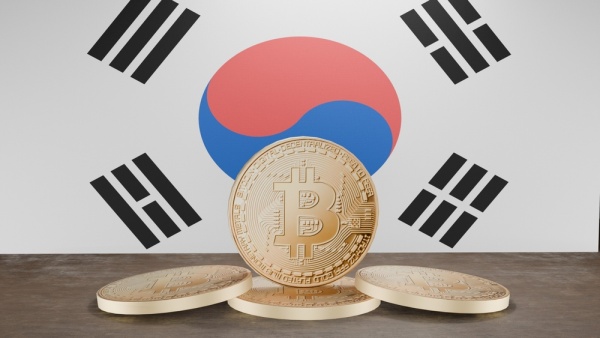
[DigitalToday reporter Yoonseo Lee (이윤서)] Bitcoin demand on domestic exchanges has strengthened again, pushing the kimchi premium close to 2 percent.
Cryptopolitan, a blockchain outlet, cited CryptoQuant data as showing the Korea Premium Index (KPI) rose to 1.98 percent on May 7, the highest since late February.
The index shows the gap between bitcoin prices on South Korean exchanges and the global volume-weighted average price (VWAP). After the U.S.-Iran conflict began in early March, it fell to a 2.27 percent discount. It returned to premium territory in two months. In South Korea, strict capital-transfer rules and residency-based real-name verification make bitcoin arbitrage nearly impossible, so the index is used to gauge real-time regional demand differences.
The latest move was volatile enough to be difficult to view as a simple rebound. The index swung between discounts and rebounds throughout March, and recovered by about 1 percentage point briefly around March 27 to 28. It mostly stayed positive in April, but intermittent declines continued. The May 7 reading marked the first time since before the U.S.-Iran conflict that it came close to 2 percent. However, a recalculated premium based on Upbit’s bitcoin price and VWAP at the time was lower at 0.77 percent.
As domestic demand revived, on-chain profit-taking also accelerated. Julio Moreno (훌리오 모레노), head of research at CryptoQuant, said 14,600 BTC were sold at a realised profit on May 4. That was the biggest daily figure since Dec. 10, 2025. The STH-SOPR, a short-term holder profitability indicator, rose to 1.016 and has stayed above 1.00 since mid-April. That means recent buyers are selling at prices above their average purchase costs.
Moreno assessed the current market as a "clear profit-taking zone". Net realised profit on a 30-day moving basis also climbed to 20,000 BTC. The figure previously fell to minus 398,000 BTC in February and March, when prices plunged early in the U.S.-Iran conflict.
Some also suggested it was difficult to view the rise as an immediate shift to a bull market. Bitcoin has risen more than 20 percent since early April, but Moreno classified the rebound as a bear-market rally rather than a structural trend reversal. "This distinction reinforces the classification as a bear-market rally rather than a structural regime shift," he said. In fact, the current net realised profit of 20,000 BTC is far from the 130,000 to 200,000 BTC range seen when markets moved from bear to bull phases.
The unrealised profit ratio has also recovered to about 18 percent. The indicator had fallen to around minus 29 percent in February and March. As unrealised gains grow, the incentive to sell can strengthen, raising the likelihood of a pullback as well. In that sense, the market has entered a phase where upward momentum and profit-taking pressure are operating at the same time.
Even so, it is difficult to be certain that a correction will appear immediately. Perpetual futures demand keeps rising, the slowdown in spot demand is limited, and exchange inflows are not large. Moreno described the current market trend as closer to a rally with risks, but without confirmation of a distribution peak.
Bitcoin is at $81,492, up about 3 percent as of May 7. With a widening premium on South Korean exchanges and rising on-chain profit-taking appearing at the same time, the market is likely to focus for now on the tug-of-war between recovering demand and selling pressure.
Bitcoin is up 36% from the 2026 low, watch out for the profit taking. Yesterday, Bitcoin holders realized the highest daily profit since December 10, equivalent to 14.6K BTC. pic.twitter.com/oGjtDcghAT
 Yoonseo Lee
yslee@d-today.co.kr
Yoonseo Lee
yslee@d-today.co.kr