
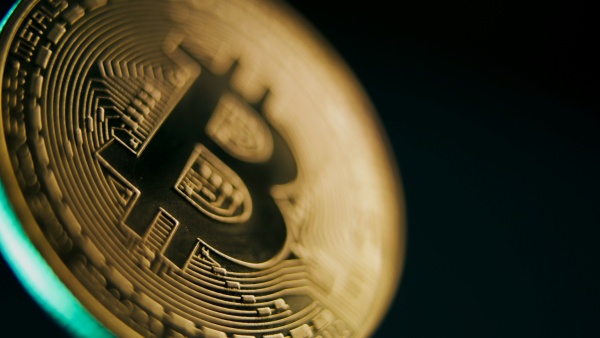
Market views are mixed on the likelihood that bitcoin (BTC) reaches $1 million before 2030. Institutional analysts stress the potential for a long-term rise, but prediction-market participants appear to place low odds on the milestone being reached.
On May 7, blockchain media outlet Cryptopolitan reported that Matthew Sigel (매튜 시겔), VanEck's head of digital assets research, said in a recent CNBC interview that bitcoin could reach $1 million within the next few years.
Sigel compared bitcoin's adoption trend to the growth of the video game industry. Video games were once seen as a hobby centered on a certain generation, but spread across all generations over time, he said. He said bitcoin is also becoming more deeply integrated into mainstream finance. "Bitcoin will reach $1 million within the next few years," he said. He also said central banks beginning to include bitcoin as part of their reserve assets is a sign that perceptions are shifting in mainstream circles.
VanEck's long-term outlook is also close to a bullish view. The company sees bitcoin rising to around $2.9 million by 2050 under its base scenario.
Similar optimism continues across Wall Street and the crypto industry. Examples include Bernstein, Bitwise Chief Investment Officer Matt Hougan, Eric Trump and Cathie Wood. In particular, Ark Invest has presented a 2030 bitcoin target of $710,000 in its base scenario and $1.5 million in a bull scenario.
Given the current price level, the required rise would be substantial. When Sigel made the remarks, bitcoin was trading at around $80,000. To reach $1 million, it would need to rise about 12 times from the current price.
Actual betting by market participants was more conservative. On prediction-market platform Manifold, traders put the chance that bitcoin breaks $1 million in the 2040s at about 27 percent. By contrast, the probability of reaching it before 2030 was just 9 percent.
On another prediction-market platform, Polymarket, the chance that bitcoin breaks $1 million within 2026 was priced at about 2 percent. By contrast, the chance of a near-term rise to $90,000 was rated higher at about 69 percent.
The influence of prediction markets is also growing. Kalshi recently raised about $1 billion in a Series F funding round, and its corporate value was put at about $22 billion. Institutional trading volume was also said to have risen 800 percent over the past six months.
Sigel also acknowledged that bitcoin's path higher would not be smooth. He described bitcoin as a "highly cyclical asset" and said its price would not rise in a straight line. "Because there is no bailout for bitcoin, strong corrections and cyclical phases can repeat along the way," he said.
Opposing views also exist. Ray Dalio pointed to the possibility of regulatory barriers to bitcoin establishing itself as a global reserve asset. Peter Schiff, a prominent gold bull, also argues that bitcoin will struggle to replace traditional safe-haven assets.
As a result, debate over the timing of bitcoin reaching $1 million is expected to continue for some time. Institutional investors and long-term bulls stress the potential for gains, citing broader mainstream adoption and a supply-limiting structure. But analysts say prediction-market participants are still pricing in high volatility and a long timeline.
 Jinju Hong
hongjj@d-today.co.kr
Jinju Hong
hongjj@d-today.co.kr