
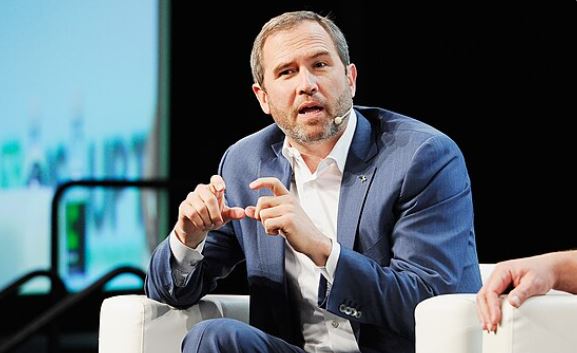
Ripple Chief Executive Brad Garlinghouse (브래드 갈링하우스) warned that the next 2 weeks could be pivotal for the chances of passing the CLARITY Act, a U.S. digital asset market structure bill.
Cointelegraph, a blockchain media outlet, reported on May 5 that Garlinghouse said passage was not a foregone conclusion even after a recent Senate compromise on stablecoin yield issues.
Speaking at the Consensus event in Miami, Garlinghouse said the bill's chances of passing could drop sharply if it is not taken up within the next 2 weeks. He said the bill could become a politically burdensome issue as the primary season continues ahead of the 2026 U.S. midterm elections.
He also did not rate the bill itself as highly complete. "If you ask me whether I think the CLARITY Act is perfect, absolutely not," Garlinghouse said. "Show me a perfect bill. Legislation involves compromise and concessions, but clarity is better than confusion," he said. The remarks were read as stressing that what the industry has sought is a system that clearly sets jurisdiction and standards, rather than ideal rules.
The comments came after Senators Thom Tillis and Angela Alsobrooks last week announced a compromise over stablecoin yield. In the Senate, issues including stablecoins, tokenised stocks and ethics have hindered progress on the bill. The bill has remained under further Senate discussion even after it passed the U.S. House of Representatives in July 2025.
Senate procedure also remains. The CLARITY Act advanced review in the Senate Agriculture Committee in January, but it must also win approval from the Senate Banking Committee before a floor vote. Garlinghouse and Ripple executives have been reported to have taken part in talks with White House officials, the crypto industry and banking representatives.
The industry is paying attention to the CLARITY Act because it is a market structure bill that organises the legal nature of digital assets and supervisory authority. U.S. crypto firms have argued that uncertainty remains over whether the same asset is a security or a commodity and which agency should supervise it.
If the bill passes, exchanges, issuers and investors may find it easier to predict regulatory standards. If it is delayed, reliance is likely to continue on the enforcement-driven regulation of the U.S. Securities and Exchange Commission and the Commodity Futures Trading Commission. That could also affect investment, listings and product launch strategies for digital asset operators in the United States.
Some in the Senate have also publicly pressed for the bill to move forward. Senator Cynthia Lummis, a member of the Banking Committee, wrote on X, formerly Twitter, that "the CLARITY Act is not a future priority, it is the top priority right now" and that the industry is operating under legal uncertainty that Congress has the power to fix. "The Senate must act," she wrote.
Regulators also appear to be moving on the assumption of a legislative vacuum. The SEC and the CFTC signed a memorandum of understanding in March to cooperate on oversight of the digital asset market structure. SEC Chair Paul Atkins said the agency's current approach to crypto-related law enforcement is not the end but the beginning, and that the commission is waiting for the CLARITY Act to pass.
Against that backdrop, the timing of the bill is emerging as a factor that could determine the direction of the broader U.S. crypto regulatory framework. If the Senate fails to advance discussions in the near term, legislative momentum could weaken as the midterm election cycle gathers pace. If the compromise becomes a foothold for further discussion, the broader framework for market structure regulation could still be fleshed out.
 Yoonseo Lee
yslee@d-today.co.kr
Yoonseo Lee
yslee@d-today.co.kr