
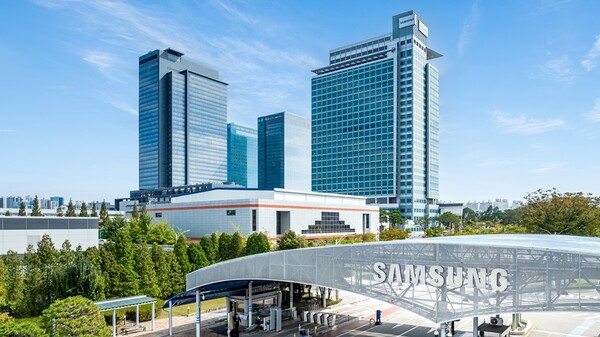
Departures are rapidly increasing at the Samsung Electronics branch of the National Samsung Electronics Union, the company’s largest union. As the union, which has warned of an all-out strike, focuses only on demands for performance bonuses in the semiconductor division (DS), dissatisfaction among members in the finished products division (DX) has surfaced. According to the industry, daily resignation requests that had been fewer than 100 rose above 500 on April 28 and then topped 1,000 on April 29.
The immediate trigger for the surge in resignations is the union’s decision to pay allowances to strike staff. The National Samsung Electronics Union began recruiting, saying it would pay up to 3 million won to staff who are active for at least 15 days during the strike. Members are pushing back by linking this to the union’s decision in January to raise dues fivefold, to 50,000 won from 10,000 won, during the dispute period.
Behind the conflict is a stark performance gap between DS and DX. Samsung Electronics posted a record quarterly result with consolidated operating profit of 57.2 trillion won in the first quarter this year. The DS division alone drove 53.7 trillion won, about a 50-fold surge from 1.1 trillion won a year earlier. The result reflects wider sales of high value-added products for AI data centres such as high-bandwidth memory (HBM), along with rising prices for standard memory. The DS division’s operating margin is estimated at 66 percent, with the memory business approaching 75 percent.
By contrast, first-quarter operating profit in the DX division, which comprises mobile (MX), TV (VD) and home appliances (DA), fell 36 percent from a year earlier to 3 trillion won. The margin was 6 percent. With rising semiconductor and component prices, the burden of U.S. tariffs and stagnant demand overlapping, some are even projecting that DX could post its first-ever annual loss this year. DX has already begun restructuring by shutting some low-profit appliance production lines and switching to outsourcing, and a management diagnosis for Samsung Electronics Korea has also been launched.
Lee Jae-myung (이재명) warns as union says "not about us"
Conflict over a Samsung Electronics strike is showing signs of spreading across the country. President Lee Jae-myung warned at a meeting of senior aides on April 30 that "if some organised workers are criticised by the public for excessive demands, it harms other workers as well". But Choi Seung-ho (최승호), chairman of the National Samsung Electronics Union, brushed it off in a members’ community, saying, "It’s about LG Uplus." Unlike the LG Uplus union’s demand for a performance bonus equivalent to 30 percent of operating profit, they are seeking 15 percent, he suggested, making their demand reasonable. A second union, the National Samsung Electronics Union (Jeonsamno), also issued a statement saying, "Defining it as an excessive demand without sufficient understanding can expand conflict."
External pressure on the union is also strong. In a Realmeter poll, 69 percent of respondents said the Samsung Electronics strike is "inappropriate". The union responded to a comment by Industry and Trade Minister Kim Jeong-gwan (김정관) that he "cannot even imagine a strike" by sending an official letter of protest. With the DX division accounting for only about 20 percent of about 74,000 union members overall, the dominant view is that the union is still highly likely to press ahead with a strike.
 Daegeon Seok
d2dg@d-today.co.kr
Daegeon Seok
d2dg@d-today.co.kr