
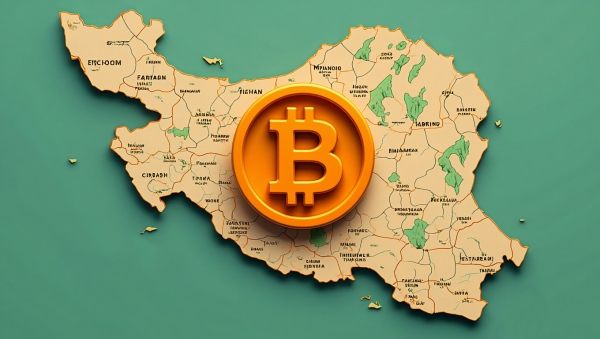
Iranian companies are increasing their use of cryptocurrencies as a way to keep overseas remittances and transactions going amid sanctions and financial isolation.
BeInCrypto, a blockchain media outlet, reported on Monday that oil remains at the core of Iran's state finances, but cryptocurrencies have taken hold as a payment method that supports day-to-day business operations.
Tensions have recently intensified. Iran claimed on Sunday that it fired missiles at a U.S. Navy vessel near the Strait of Hormuz. The United States denied it, saying Iran only fired warning shots. Around the same time, the United States began a naval operation to support passage through the strait, deploying destroyers, aircraft, drones and about 15,000 troops. Brent crude later rose to $120, and bitcoin regained $80,000.
Ebrahim Melro (에브라힘 멜로), an Iran and Middle East expert and a member of the BRICS+ Consortium Business Council, said it is now difficult to imagine Iran's domestic and overseas transactions without cryptocurrencies. He said companies and individuals moved to digital assets as the use of Visa and Mastercard was blocked and access to SWIFT was limited.
In Iran, a method is being used in which rial in local bank accounts is converted into cryptocurrency and sent abroad. Funds can be moved via wallet transfers to Russia, Turkey, Arab countries and North America. Some exchange bulletin boards display bitcoin prices, and some high-end restaurants in Tehran accept cryptocurrency payments.
The spread of mining also amplified the trend. Iran, backed by its oil and gas resources, has low electricity rates, putting the cost of mining 1 bitcoin at about $1,000 to $1,500. Mining equipment has therefore spread to factories, schools, mosques and private buildings. The mining boom has also weighed on the power grid, and government crackdowns on illegal mining have shown limits across households, businesses and industrial sites.
Cryptocurrencies do not solve all of Iran's trade problems. Iranian companies still often rely on handshake agreements, cash, pro forma invoices and wallet transfers. These methods are causing friction in markets such as Russia, where contracts, labelling rules, certificates and official bank transaction records are important.
Cryptocurrencies help move money when access to formal financial networks is blocked, but they are not replacing legal frameworks, market understanding or trust in cross-border transactions.
 Hyunwoo Choo
cookinpapa@d-today.co.kr
Hyunwoo Choo
cookinpapa@d-today.co.kr