
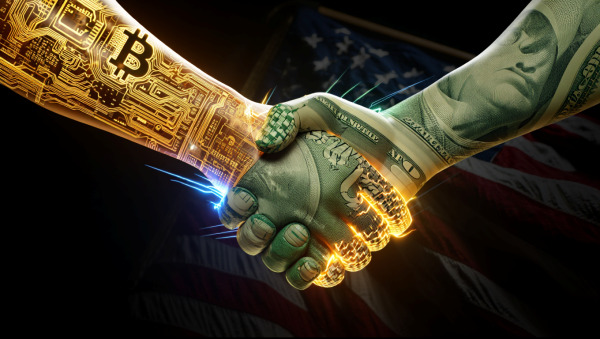
A claim has emerged that demand for the U.S. dollar rises along with the spread of bitcoin (BTC) and dollar-pegged stablecoins, forming a "symbiotic relationship."
According to blockchain outlet Cointelegraph on April 5, Sam Lyman, head of research at the Bitcoin Policy Institute (BPI), cited the trading-pair structure as a reason bitcoin benefits the U.S. financial system.
Lyman said, "Bitcoin is beneficial to the U.S. system. That is because the biggest bitcoin trading pair is BTC/USD." He also said that in actual trading, Tether's dollar-linked stablecoin USDT functions as a core axis. Because USDT is issued based on cash-like assets and short-term U.S. Treasuries, the logic is that as bitcoin trading increases, dollar-based liquidity also expands.
He compared the relationship to the "petrodollar" system that began in the early 1970s, a financial system formed when oil payments were made only in dollars. The logic is that just as dollar demand grew when international crude oil trade was priced in dollars, dollar-based stablecoins and the BTC/USD convention in global cryptoasset markets strengthen the dollar's network effects.
From this perspective, he viewed stablecoin regulation as linked to geopolitical competitiveness beyond simple financial policy. He urged the U.S. Congress to continue developing the GENIUS regulatory framework without deviating from core principles. He argued that maintaining and protecting the regulatory framework around dollar-pegged stablecoins is also connected to preserving the dollar's influence.
By contrast, he assessed that China's approach is the opposite. He pointed to capital controls as the reason China has repeatedly banned bitcoin and stablecoins. He explained that such assets can facilitate cross-border fund transfers and could weaken government control. China is seeking to strengthen control over money flows by promoting the digital yuan, a central bank digital currency (CBDC), instead of allowing stablecoins.
An analysis also said that despite regulation, unlicensed cryptoasset activity has not been fully curbed. Lyman pointed out that bitcoin mining and stablecoin fund flows are still continuing, and that some data show China-linked mining pools account for a significant share of the global hashrate.
 Jinju Hong
hongjj@d-today.co.kr
Jinju Hong
hongjj@d-today.co.kr