
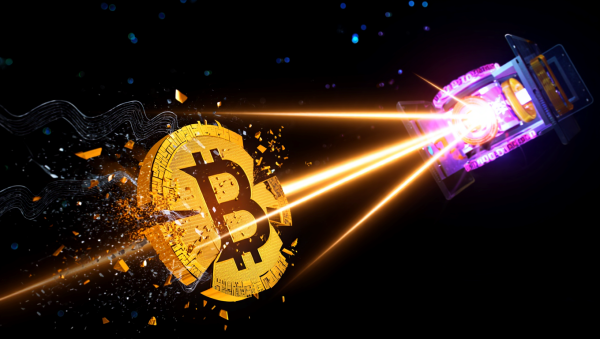
A warning has emerged that advances in quantum computing technology could pose a potential threat to bitcoin (BTC) security. CryptoQuant CEO Ki Young Ju (주기영) wrote on social media about the possibility of quantum attacks and said about 6.89 million BTC is theoretically exposed to attack risk. That includes 1 million BTC believed to be linked to bitcoin creator Satoshi Nakamoto, adding to market wariness.
On Feb. 19 local time, blockchain media outlet CoinPost reported, citing CryptoQuant analysis, that if quantum computers achieve commercial-grade computing power, bitcoin wallet security could be potentially threatened.
Bitcoin security is based on elliptic curve cryptography (ECC), which is effectively hard to crack with conventional computers. If quantum computers with sufficient processing power become practical, it could become possible to derive private keys from public keys disclosed on-chain. In particular, once a public key is exposed on the chain, the address could become structurally vulnerable, leaving the risk in place for a long time.
CryptoQuant said that of the roughly 6.89 million BTC that could be vulnerable, long-dormant addresses with no movement for more than 10 years account for about 3.4 million BTC. At current prices, that amounts to hundreds of billions of dollars, Ki said, arguing the economic incentive for a quantum attack is sufficient.
Possible countermeasures include banning the use of older address types, forcing a switch to quantum-resistant addresses and freezing dormant coins at the protocol level. Such measures could conflict with bitcoin's design principle that it cannot infringe on individual property rights. Critics also warn that holders who fail to respond to upgrades could face a risk that existing private keys become meaningless.
Ki cited cases in which a long-running block size debate spilled into a hard fork and the precedent of SegWit2x collapsing after failing to win sufficient consensus. "Technical fixes (proposals) can move quickly, but social consensus cannot," he said. Freezing dormant coins could create greater division than past disputes, and if consensus is not reached, it cannot be ruled out that competing bitcoin forks could emerge alongside advances in quantum technology, the report said.
As quantum computer development accelerates, the industry has begun debating whether "Q-day"—the point at which quantum attacks become reality—is 5 years away or 10 years away. Technical solutions remain at the research stage, but whether the community can reach agreement without fracturing is uncertain. Discussions over how to handle dormant assets, including Satoshi coins, could become a test that determines the future sustainability of the bitcoin network, the report said.
 Yoonseo Lee
yslee@d-today.co.kr
Yoonseo Lee
yslee@d-today.co.kr