
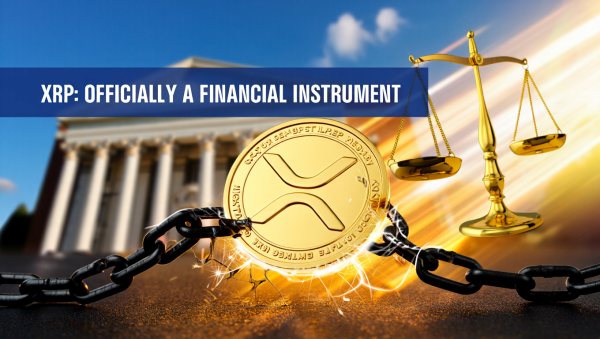
As regulatory moves spread to classify cryptocurrencies as financial products, concerns have been raised that the approach could weaken their technical functions.
On March 13, blockchain outlet The Crypto Basic reported that Bill Morgan (빌 모건), a lawyer who has been active in Ripple-related litigation, recently warned that discussions to bring cryptocurrencies such as bitcoin and XRP under traditional financial product regulatory frameworks could lead to unexpected results. His remarks came in response to reports that Japan is reviewing a plan to classify bitcoin as a financial product.
Morgan said the regulatory discussions could affect not only bitcoin but also other major cryptocurrencies such as XRP and Solana (SOL). He explained that applying traditional securities regulations to cryptocurrencies as they are could weaken the assets' technical advantages.
Concerns were raised in particular about XRP's utility. A key feature of XRP is its use as a "bridge currency" to move value quickly between various financial systems. Morgan argued that if XRP is classified as a financial product and becomes subject to securities regulations, that efficiency could be constrained.
"If strict financial product regulations are applied directly to the asset itself, XRP's fast and low-cost payment function could be affected," he said, adding that regulators should consider how their approach affects technological usability.
Morgan also pointed out that definitions of financial products differ by country. For example, Japan and Australia regulate cryptocurrencies in different ways, meaning the same concept may not lead to the same outcome.
In Australia, he said a recently discussed bill related to cryptocurrencies focuses on regulating intermediary service providers rather than the digital assets themselves. He said the bill's core is to define when companies or platforms must obtain an Australian Financial Services Licence, and it is not aimed at redefining cryptocurrencies themselves as financial products.
In the United States, moves are also under way to improve regulatory clarity for cryptocurrencies. The U.S. Securities and Exchange Commission (SEC) and the Commodity Futures Trading Commission (CFTC) recently signed a cooperation agreement to coordinate how they regulate digital assets.
The cooperation aims to reduce overlapping regulation and build a more consistent regulatory framework in rulemaking, supervision and enforcement. It also includes tougher oversight of trading platforms, streamlined reporting rules and the creation of a digital asset regulatory framework.
Regulators said the cooperation is intended to reduce uncertainty in the cryptocurrency market and help companies operate digital assets and traditional financial markets more stably.
 Jinju Hong
hongjj@d-today.co.kr
Jinju Hong
hongjj@d-today.co.kr