
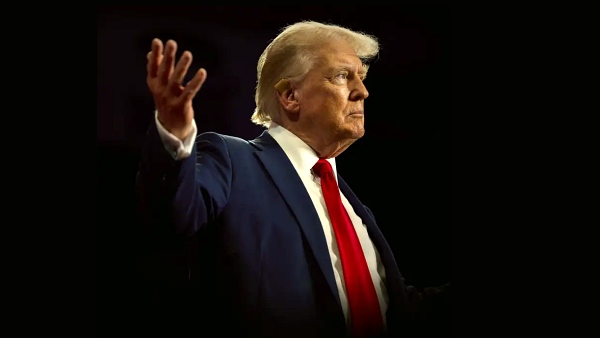
U.S. President Donald Trump said he is considering expanding holdings of cryptocurrencies including bitcoin, but an analysis said an open-market purchase programme worth billions of dollars would require explicit authorisation from Congress.
On Aug. 20 local time, blockchain media outlet CryptoSlate reported that current law leaves some routes open for the executive branch to increase the federal government's cryptocurrency holdings. It said there is still no approved public framework that would allow the Treasury Department to directly buy bitcoin in the market using billions of dollars.
The key issue is that bitcoin and other cryptocurrencies are treated differently under the law. An executive order Trump signed in 2025 directed the Treasury and Commerce departments to devise a "budget-neutral" way to secure bitcoin without imposing additional burdens on taxpayers. By contrast, it limited non-bitcoin assets to being added to reserves only through seizures and civil monetary penalties unless there is further administrative action or legislation. That means additional executive orders or legislation would be needed to widen the paths for adding assets such as ethereum, XRP and solana.
Even if an additional executive order is issued, Congress' authority remains. The existing executive order stipulates that implementation must follow "applicable law" and the "availability of appropriations". Even under a budget-neutral approach, the Treasury would need assets or resources it can legally obtain, and legal authority to use them.
For now, the most practical routes available to the executive branch are seized assets, donations and tax payments. Bitcoin whose criminal or civil forfeiture procedures have been finalised is added to the Strategic Bitcoin Reserve, while non-bitcoin assets are added to the Digital Asset Stockpile. The U.S. government secured legal ownership of more than $400 million in cryptocurrencies and other assets in January 2026 in connection with the Helix Mixer case.
Still, the amount the Treasury actually holds could shrink if restitution, law enforcement obligations and forfeiture-related regulations apply. Because the timing of incidents and the scale of seizures cannot be predicted, it is impossible to use them as a regular purchase programme with set target quantities and schedules.
Acquisition through donations is also being discussed. As bitcoin is treated as property under federal tax law, the Treasury could incorporate donated bitcoin into the federal holdings system. If an additional executive order designates donated assets as an official funding source, it could open some paths for cryptocurrencies other than bitcoin as well.
Another option under review is paying federal taxes in bitcoin. The U.S. Internal Revenue Service does not currently accept digital-asset payments, but the Treasury could review whether to allow bitcoin payments by updating regulations. It would require a separate determination whether bitcoin received that way can remain in the Strategic Bitcoin Reserve.
By contrast, buying bitcoin in large quantities on the open market is likely to conflict with existing laws enacted by Congress. The same applies to using proceeds from selling non-bitcoin assets such as ethereum, solana and XRP to fund purchases. Under federal fiscal law, government revenue generally accrues to the Treasury, and without separate legislation it would be difficult to use it again to buy bitcoin.
The "American Reserve Modernization Act" introduced in 2026 would allow non-bitcoin assets to be sold, exchanged or converted to increase bitcoin reserves or to reduce federal debt. But the bill has not yet completed the legislative process.
Ultimately, for Trump's plan to lead to a regular federal bitcoin purchase programme, Congress would need to explicitly grant purchase authority and funding mechanisms. If legislation similar to the "BITCOIN Act" is passed, it could also make possible a programme to buy 200,000 BTC a year for 5 years.
The issue has again confirmed that expanding the U.S. government's cryptocurrency holdings is difficult to 추진 solely on the president's will. Inflow routes such as seizures, donations and tax payments differ legally from open-market purchases, and an actual purchase programme is likely to depend on a congressional approval structure.
 Yoonseo Lee
yslee@d-today.co.kr
Yoonseo Lee
yslee@d-today.co.kr