
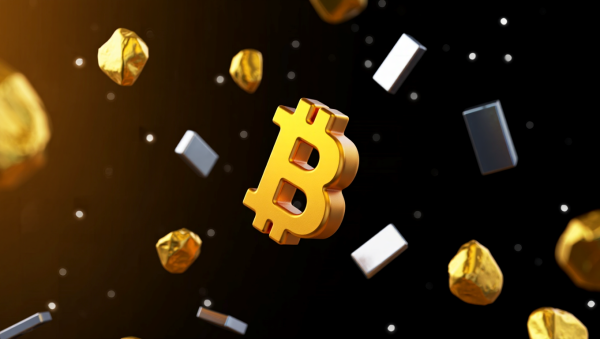
[DigitalToday reporter Yoonseo Lee] In 2026, the concept of scarcity is being reshaped beyond simple supply shortages, depending on market structure, liquidity and accessibility. Bitcoin, gold and silver each assert scarcity in different ways, steering investors’ choices.
On Jan. 8, blockchain media outlet Cointelegraph pointed out that investors are newly valuing bitcoin, gold and silver, and that the meaning of scarcity in 2026 asset markets is changing.
Bitcoin’s scarcity stems from a total supply capped at 21 million and a transparent issuance schedule. The recent expansion of exchange-traded funds (ETFs) and derivatives is fundamentally changing how it is accessed in financial markets. As spot ETFs gain traction, bitcoin has turned into a core institutional asset in which liquidity and market logic set the price. Still, lingering regulatory risks are sharpening a preference for price exposure that seeks only capital gains through financial products rather than physical holding.
Gold’s scarcity has traditionally been determined by physical mining volumes, but now “trust” and “neutrality” are emerging as more important factors. Because gold has strong legal and institutional credibility and mining costs carry uncertainty, investors view it as a risk-free collateral asset not tied to any particular country’s debt or monetary policy. Global central banks and sovereign wealth funds continue buying gold not because of limits on mining volumes, but because of its value as an independent trust asset outside the financial system that functions even in times of crisis.
Silver’s scarcity is adjusted flexibly in line with industrial demand and financial-market volatility, with demand in electronics, solar power and advanced manufacturing acting as key variables. Silver has both safe-haven characteristics and the traits of a cyclical industrial material, and its value can be rapidly reassessed depending on global manufacturing trends and supply-chain issues. Because it reacts sensitively to industrial demand, the value of its scarcity can fluctuate far more than gold as financial-market structures change.
The core of this reassessment is not forecasting which asset will be superior, but understanding how investors interpret scarcity and price it. Bitcoin offers strong supply certainty, but regulatory uncertainty is large. Gold has high legal and institutional trust, but mining costs are uncertain. Silver responds sensitively to industrial demand, and the value of its scarcity can swing sharply as financial-market structures change.
Ultimately, scarcity in 2026 is not a single concept but is applied differently depending on market structure and narratives. Bitcoin’s scarcity is defined by portability and rules-based certainty, gold’s by trust and neutrality, and silver’s by industrial demand and supply volatility. Investors are entering an era of asset assessment that goes beyond simple scarcity to consider liquidity, ease of trading and credibility.
 Yoonseo Lee
yslee@d-today.co.kr
Yoonseo Lee
yslee@d-today.co.kr