
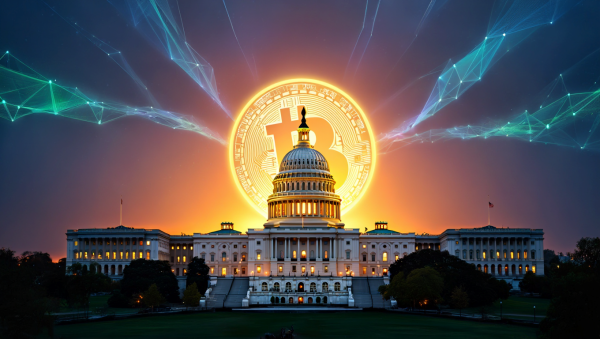
As the U.S. Senate enters last-minute negotiations to pass the CLARITY bill that defines cryptocurrency market structure, a compromise is taking shape on ethics provisions and enforcement authority, long seen as the biggest obstacles.
The White House is pressuring Democrats to pass the bill, saying President Donald Trump has accepted conflict-of-interest safeguards. Senate negotiators say the effort is "almost there" and are leaning toward passage before the August recess.
According to Bitcoin Magazine on Monday, the White House and the Senate negotiating team are continuing final adjustments on new ethics provisions and an enforcement framework aimed at resolving conflict-of-interest controversy tied to Trump's crypto business.
Key questions include how far to restrict senior public officials' involvement in crypto businesses and who will enforce the restrictions. The White House said Trump agreed to what it called "the most comprehensive and far-reaching ethics provisions in history" and argued Democrats should no longer delay the bill. What limits Trump accepted has not been disclosed, and release of the final draft bill containing the language is also being delayed.
Democrats are reported to have not yet been briefed on specific terms of any agreement. Even Democratic senators involved in the talks, including Kirsten Gillibrand, Ruben Gallego and Angela Alsobrooks, have not reviewed the details. The party has maintained that effective conflict-of-interest safeguards must be included.
The enforcement structure is also a key late-stage variable. Senator Kevin Cramer, a member of the Senate Banking Committee, said some consensus is forming in the current talks around the Justice Department being the main enforcement agency. Senator Cynthia Lummis earlier considered an approach that would allow state attorneys general to sue exchanges that list tokens issued by public officials, but talks appear to be shifting toward an enforcement system centered on the federal Justice Department rather than state governments.
Some in the industry, however, see the definition of "broker" in securities as an unresolved task. Cramer said the industry is pushing back against the current definition because it does not sufficiently reflect decentralized characteristics, but he assessed the remaining differences as "small details."
Conflict-of-interest controversy surrounding Trump has been a burden throughout the talks. Reuters reported that the Trump family's assets increased by more than $2 billion since he returned to power, and Trump has disclosed that he earned more than $1 billion in revenue from crypto businesses last year. Democrats pushed an amendment to restrict crypto business ties for the president, vice president and members of Congress, but it was voted down during committee review.
The bill itself has already passed the Senate Banking Committee by 15 to 9. Gallego and Alsobrooks, both Democrats, voted in favor at the time, but they have said they would find it difficult to back the final vote unless ethics provisions are sufficiently reflected.
Time is running short. Senate Republican leader John Thune is targeting a floor vote before the recess in early August, and Treasury Secretary Scott Bessent urged swift action, saying the bill is at the "one-yard line." The Senate must also handle budget bills and a continuing resolution to prevent a government shutdown, meaning the actual voting schedule could be affected by the legislative calendar.
Markets are viewing the release of the final ethics provisions and whether Democratic negotiators accept them as the last watershed for passage. Galaxy Research assessed the current odds of the CLARITY bill passing at about 50 percent.
 Jinju Hong
hongjj@d-today.co.kr
Jinju Hong
hongjj@d-today.co.kr