
[DigitalToday reporter Yoonseo Lee] Companies are moving away from a trend of simply increasing artificial intelligence (AI) usage. They are shifting to cost-control strategies that split AI models by the nature of the work.
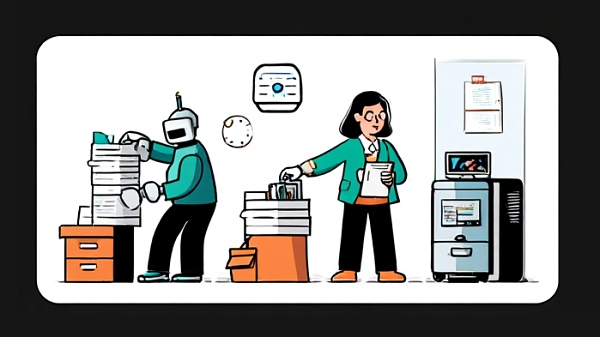
Business Insider reported on July 4 that the AI industry is increasingly focusing on “model mixing,” selecting models based on task difficulty, rather than “token mixing,” which maximises token usage.
Morgan Linton, chief technology officer at AI startup Bold Metrics, said he directly assigns models to engineers by task. One team gets a lightweight Claude Fable setup, another team is assigned a high-performance GPT-5.5 configuration, and another team combines Cursor and Composer 2.5. Linton said this allows him to manage costs without setting separate token limits.
The shift is emerging as corporate AI spending grows rapidly. Uber and Microsoft are also seen returning to a more cautious approach after reviewing employees’ AI usage costs.
Brian Armstrong, chief executive of cryptocurrency exchange Coinbase, said in June that 80 percent of the overall workload would run on models that are 99 percent cheaper within 12 to 18 months. He added that only the remaining 20 percent would stay on the latest models, and that maximising intelligence is important in that area.
Users in the field are also adjusting how they use AI. Tanvi Pisal, a user experience (UX) designer in the big tech industry, said she used Claude to develop UX concepts but still could not finish the work after wasting several months’ worth of tokens. She later changed her approach by completing screen designs in Figma and then uploading screenshots to Claude to build only the functions and flow. Pisal said this design-first approach helped reduce token use.
Chris Marconi, a co-founder of AI startup Hachura, is also actively experimenting with low-cost models. He said he first used a cheaper Gemini model when building Openclo and then switched to Anthropic’s Haiku. Marconi said, “There’s no need to hesitate to test whether a lower-tier model provides the level of intelligence you need.”
Model-routing companies are also drawing attention in this process. They provide software that analyses a request and automatically assigns a specific AI model based on difficulty. David Gilmore, who runs Raylin, said many customers are initially swept up by fear of missing out on the latest models, but then reduce usage after receiving their API bills.
San Francisco investment firm Blocksfaceforce uses OpenRouter, Fireworks and Together AI. Co-CEO Spencer Yang recommended an approach that first has a low-cost model judge whether a more expensive model is needed for the task. He said AI models are also getting better at assessing task complexity on their own.
Not all companies have joined the trend. Some companies still use the newest and most expensive models as the default. Marconi said of the practice, “People don’t want to do the hard work of understanding which model is good for which job,” adding, “They just try to follow the trend.”
As AI budget controls take hold, the operational ability to deploy appropriate models by task is emerging as a corporate competitive edge that will determine performance and costs.
 Yoonseo Lee
yslee@d-today.co.kr
Yoonseo Lee
yslee@d-today.co.kr