
Paolo Ardoino (파올로 아르도이노), chief executive of Tether, warned that structural mismatches are accumulating in big tech’s race to invest in artificial intelligence infrastructure. He argued that the expansion of AI data centres relies on computing that functions like a subsidy and on hardware that rapidly loses value, meaning the current investment approach may not be sustainable over the long term.
On July 4 local time, blockchain outlet Cryptopolitan reported that Ardoino diagnosed the AI industry as having four structural problems. He pointed to AI companies effectively subsidising computing costs to acquire users and pouring massive capital into hardware whose value falls sharply within 3 to 5 years.
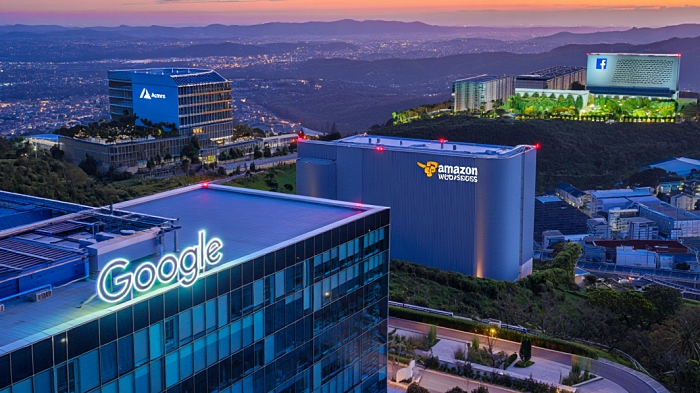
The remarks came as global big tech companies pour record amounts of money into a race to build AI data centres. Ardoino assessed that the infrastructure race is overheating at a time when return on investment has not yet been sufficiently verified.
Market forecasts also support the trend of expanding investment. In a recent report, JP Morgan forecast that global AI-related capital spending will reach $5.5 trillion by 2030. That was an upward revision from the previous estimate of $5.1 trillion. Over the same period, it projected AI-related debt financing will also amount to $4.1 trillion.
Spending by hyperscalers continues to rise. JP Morgan expects capital spending by major cloud companies to total $650 billion this year and exceed $1.1 trillion in 2027. Microsoft plans to invest about $190 billion in AI infrastructure in 2026, up 61 percent from the previous year.
Goldman Sachs also estimated that cumulative capital spending by four companies - Meta, Microsoft, Amazon and Alphabet - will total $5.3 trillion from 2025 to 2030. These companies’ investment plans for this year alone are $725 billion, up 77 percent from last year. Alphabet in particular raised $84.75 billion to expand AI infrastructure, which was assessed as one of the largest equity capital raises in U.S. history.
Returns relative to investment remain uncertain. Companies’ average AI investment this year was tallied at $11.5 million, but many companies have yet to prove clear investment returns. U.S. Bureau of Economic Analysis data also showed the growth rate of the information technology sector slowed to 1.5 percent in the first quarter of 2026 from 3.2 percent in the third quarter of last year.
As cost burdens grow, corporate strategies are changing. Ardoino mentioned the possibility that open-source AI may take a larger share going forward and questioned the cost structure of closed AI services. Companies have started to manage the cost of using AI services. Amazon scrapped an internal leaderboard that tracked employees’ AI usage, and Uber set a monthly limit of $1,500 per employee after using up its AI coding budget in four months. Meta was also reported to have told some employees there was a need to manage costs related to rising AI expenses.
A strategy of using multiple AI models is also spreading. Market research firm IDC forecast that by 2028, 70 percent of leading companies in AI adoption will choose a multi-model strategy that uses several AI models together instead of a single model. It said this could become a factor that promotes price competition in AI services over the long term.
Regulators are also watching the AI investment boom. In a recent annual report, the Bank for International Settlements warned that if a sharp drop in AI investment materialises, it could deliver a bigger shock to global stock markets than past recessions. The BIS assessed that the pace of an AI investment adjustment could proceed much faster than during past financial crisis phases.
Optimism persists. Wedbush Securities technology analyst Dan Ives described the AI infrastructure race as an "arms race no one can sit out" and forecast that investment results will start to appear in earnest within the next 6 to 12 months. JP Morgan also expected operating cash flow at major big tech companies to exceed $900 billion in 2027 and said they have ample capacity to invest.
The market sees the upcoming earnings season as an important turning point. Some investors have raised the possibility that at least one of the major big tech companies will announce a reduction in AI capital spending. If the pace of investment starts to slow, the risks in the structure of AI infrastructure investment raised by Ardoino are expected to enter a full-fledged verification stage.
 Jinju Hong
hongjj@d-today.co.kr
Jinju Hong
hongjj@d-today.co.kr