
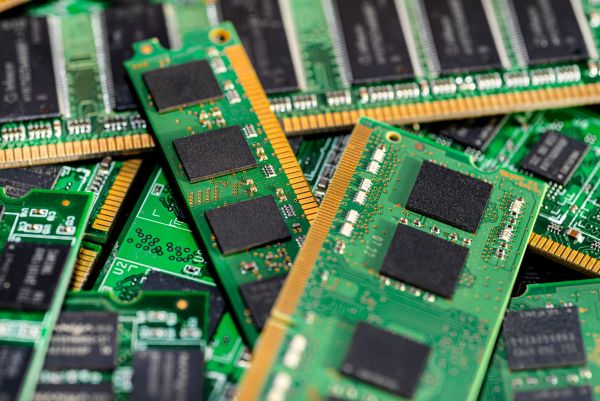
[DigitalToday intern reporter Seung-a Yoo (유승아)] A forecast says memory prices will rise 40 to 50 percent in the third quarter of 2026 from the previous quarter and climb another 30 to 40 percent in the fourth quarter.
On June 30, online media outlet Gigazine reported that Jefferies Equity Research expects memory prices to show little clear improvement through 2028.
The report cited supply shortages driven by expanding demand for artificial intelligence. The industry also has a forecast that global memory supply will meet only 60 percent of demand through 2027. Jefferies Equity Research expects memory prices to rise 40 to 45 percent in 2027 from a year earlier.
Samsung Electronics, SK Hynix and Micron are moving to expand capacity, but most new production facilities are expected to begin operating only in 2027 or 2028. In 2028, an additional 15 to 20 percent of new capacity could lower average selling prices for memory. The report said the impact of supply expansion is expected to be limited as AI and computing demand continues to grow.
An expansion of long-term contracts by memory makers was also cited as a factor reducing supply of consumer products. About 50 percent of total capacity is currently allocated to long-term contracts with large technology companies, and that share could rise to 70 percent. As memory makers prioritise AI data centre demand over consumer products, supply for PCs, smartphones and game consoles could shrink further, potentially lifting prices for related products.
Apple raised prices across its hardware products, including the Mac, iPad and Vision Pro, on June 25, 2026. It kept iPhone prices unchanged. Apple has reportedly asked the U.S. government for approval to buy memory from Chinese memory maker CXMT, which the U.S. Defense Department has placed on its '1260H list' of Chinese military companies, in response to a sharp rise in memory prices.
There had also been expectations that capacity expansion by Chinese memory makers such as CXMT and YMTC would curb price increases, but their product prices are known to be at levels similar to those of Samsung Electronics, SK Hynix and Micron. The structure makes it difficult for them to act as low-cost suppliers and push down market prices.
A class action lawsuit was also filed in June against Samsung Electronics, SK Hynix and Micron in the U.S. District Court for the Northern District of California. Plaintiffs are seeking damages, alleging the companies created an artificial shortage of memory supply to push up prices.
 Seung-a Yoo
ysah@d-today.co.kr
Seung-a Yoo
ysah@d-today.co.kr