
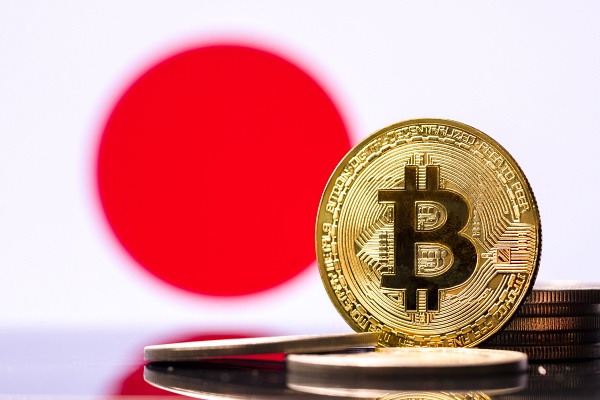
Japan is bringing overseas-issued trust-type stablecoins into its domestic payment system.
BeInCrypto, a blockchain media outlet, reported on May 19 that Japan's Financial Services Agency has finalised revisions allowing overseas-issued trust-type stablecoins to enter payment systems. The changes take effect on June 1.
The core of the revision is to change the legal status of overseas stablecoins. Japan reclassified overseas-issued trust-type stablecoins that meet certain requirements as electronic payment instruments under the Payment Services Act. Until now, overseas stablecoins were classified as securities in Japan or left in a regulatory gap, making them hard to use for everyday payments. The new rules lower that barrier and pull global stablecoins into Japan's official financial infrastructure.
Trust-type stablecoins refer to digital tokens that are fully collateralised by reserve assets held in a trust structure and redeemable 1 for 1 with fiat currency. Japan will recognise only those overseas stablecoins with this structure as payment instruments when they are subject to regulation equivalent to Japan's standards.
The review standards are relatively strict. Overseas issuers must prove that their home-country regulation matches Japan's licensing system, accounting audits, anti-money laundering controls and same-currency reserve asset requirements. The same-currency reserve asset requirement was presented as a measure to reduce foreign exchange fluctuation risk. It effectively requires overseas issuers to meet regulation equivalent to Japan's.
Responsibilities for intermediaries in Japan also increase. Local intermediaries must first verify that the stablecoin meets regulatory requirements. SBI VC Trade is reported to be reviewing the possibility of authorised services using global stablecoins such as USDC.
The market is watching how quickly actual services launch after the June 1 implementation. There are expectations that, if the system takes hold, inflows of overseas funds will accelerate and new use cases such as remittances and tokenised payment systems could open up. Attention is also on Japan's financial authorities choosing to bring overseas stablecoins into the payments ecosystem rather than keeping them in the realm of speculative assets.
The move also ties into legislative debate in the United States. The U.S. Senate Banking Committee recently advanced the Clarity Act in a 15-9 vote. The bill includes provisions to delineate jurisdiction between the Securities and Exchange Commission and the Commodity Futures Trading Commission, and it also addresses stablecoin rules in connection with the earlier Genius Act.
One of the points of contention in the U.S. debate is how interest is paid. The bill largely bans passive interest on payment stablecoins like bank deposits, while allowing rewards based on user activity. Gene Ludoni (진 비도니), chief executive of Penn Community Bank, said, "We need to more tightly close the loopholes in the interest ban," adding that issuers as well as exchanges, affiliates and intermediaries should be prevented from providing indirect returns.
The market's view on the prospects for legislation is cautiously improving. Alex Thorn (알렉스 손) of Galaxy Digital estimated the likelihood that the Clarity Act will be enacted into law in 2026 at about 65 percent to 75 percent. Prediction market Polymarket also reflects the likelihood of enactment in 2026 at 64 percent.
Japan's regulatory revision and the legislative progress in the United States commonly show a trend of bringing stablecoins into mainstream finance. Japan is allowing overseas stablecoins to be used for payments while emphasising regulatory equivalence and intermediary verification, and the United States is moving to define supervisory authority and interest rules in law. The points to watch will be how quickly authorised cases emerge in Japan and whether stablecoin provisions in the United States carry through to final legislation.
 Yoonseo Lee
yslee@d-today.co.kr
Yoonseo Lee
yslee@d-today.co.kr