
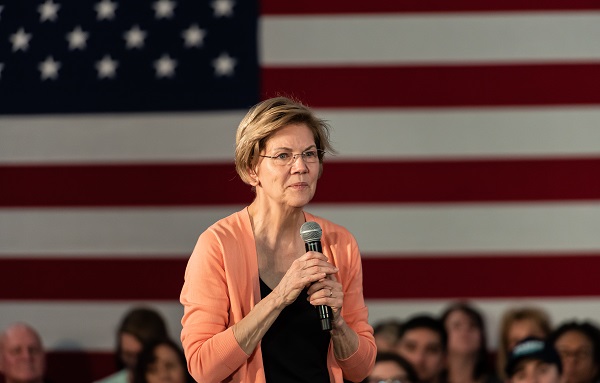
U.S. Democratic Senator Elizabeth Warren (엘리자베스 워런), a leading advocate of tougher cryptocurrency regulation, raised a direct challenge to the Office of the Comptroller of the Currency's procedures for chartering crypto firms. She argues crypto firms are effectively conducting banking business while avoiding existing financial regulation.
CoinPost, a blockchain media outlet, reported on Tuesday that Warren sent a letter on May 18 to OCC head Jonathan Gould (조나단 굴드). She questioned the legality of nine nationwide trust charters granted to crypto-related firms since December 2025.
The firms cited include Coinbase National Trust Company, a unit of Coinbase, and Ripple National Trust Bank (RNTB), affiliated with Ripple.
Warren said the business plans of these firms fall outside the purpose of the nationwide trust company system. Coinbase said in its application it planned to offer staking and lending for custody clients, trading services and payment products. Protego's National Digital Trust Company was also reported to include businesses beyond custody, including trading, lending, borrowing and platform operations.
She said, "None of the nine firms has shown that its core business is custody." Under the U.S. National Bank Act, a nationwide trust company is an institution that performs limited duties managing assets on behalf of beneficiaries, such as as trustee, executor or guardian. Unlike commercial banks, it can be exempted from the requirement to join the Federal Deposit Insurance Corp and from some supervision under the Bank Holding Company Act.
Warren criticised the structure as potentially providing crypto firms with "regulatory arbitrage". She said it could be used as a channel to avoid existing bank regulation while offering services similar to banks.
She also raised concerns that the OCC's final rule announced in March may have excessively expanded the scope of permitted activities for nationwide trust companies. She demanded that the OCC submit by June 1 the relevant applications and all internal communications records to confirm the legal basis on which it approved the charters.
Political pressure over federal charters for crypto firms has continued since early this year. In February, 41 Democratic members of the U.S. House of Representatives sent a joint letter to Treasury Secretary Scott Bessent, seeking an explanation of the review process for a nationwide trust bank charter application by WTLC Holdings, a unit of World Liberty Financial (WLF).
The industry is watching the dispute as potentially going beyond a simple request for documents and leading to moves to review the overall federal chartering system for crypto firms. A key issue is how far the OCC can permit crypto businesses through trust charters and how to align fairness with existing bank regulation.
 Jinju Hong
hongjj@d-today.co.kr
Jinju Hong
hongjj@d-today.co.kr