
Major cryptocurrency exchanges are calling for looser token listing standards in a crypto market-structure bill being discussed by the U.S. Senate, intensifying a debate over the direction of regulation. It is shaping up as a full-scale power struggle between the industry and policy authorities.
Coinbase, Kraken and Gemini have asked for the deletion or revision of language in the digital asset market-structure bill under discussion in the U.S. Senate that could restrict token listings, Cointelegraph reported on May 8.
The provision in question would require platforms to trade only digital assets that are not "easily exposed to manipulation". The exchanges worry the wording could effectively make it difficult to list tokens with low liquidity or small market value. The industry believes that keeping the clause would sharply raise barriers for new projects seeking to enter exchanges.
The dispute has quickly spread into politics. Politico reported that the language was briefly included during discussions in the Senate Agriculture Committee in January before being deleted. This is seen as an example of industry views being reflected to some extent from the draft stage of regulation.
The matter is also cited as a representative example of the crypto industry's influence in U.S. politics. The Senate Banking Committee is reported to have postponed its review shortly after Brian Armstrong opposed the current bill language. He is also reported to have pointed to regulatory uncertainty related to tokenised stocks as an issue.
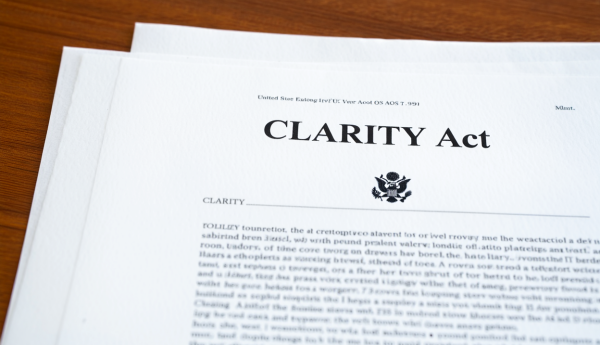
The bill is described as an extension of the Clarity Act that passed the U.S. House of Representatives in July 2025, with a core focus on expanding the Commodity Futures Trading Commission's authority to oversee the digital asset market. Coordination of oversight authority with the Securities and Exchange Commission is also emerging as a key issue.
The legislative process is still under way. The Senate is also discussing a compromise on additional issues such as regulation of stablecoin yields, and some senators are aiming to pass the bill before the August recess. The White House is also reported to be pinning hopes on a schedule targeting a Senate vote in June and House action in July.
Within the industry, there is a view that the future market structure could change significantly depending on how regulatory standards for exchanges are set. How token listing standards, the allocation of oversight authority and conflict-of-interest prevention rules are reflected in the final bill has emerged as a key variable.
Separately, a Coinbase policy chief is reported to have cautioned against overheated interpretations of the issue, calling it "a matter already discussed in the past". But with the final version of the bill not yet settled, the possibility of further changes during Senate deliberations remains open.
 Jinju Hong
hongjj@d-today.co.kr
Jinju Hong
hongjj@d-today.co.kr