
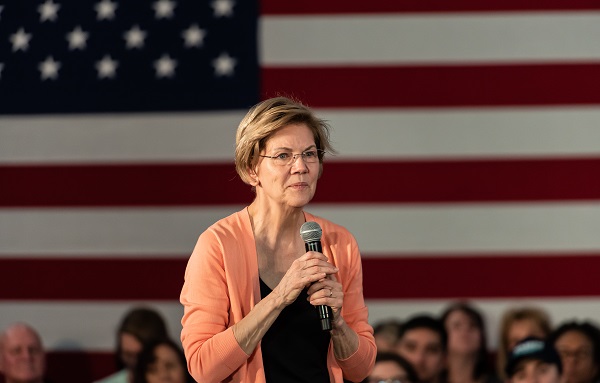
U.S. Senator Elizabeth Warren (엘리자베스 워런) has launched an official inquiry into Meta's move to expand stablecoin payments. As Meta pushes to broaden global payments using third-party stablecoins, concerns in U.S. political circles appear to be rising again over financial stability, personal data protection and the possibility of growing market dominance.
On May 7, local time, blockchain outlet Cryptopolitan reported that Warren sent a formal letter to Meta seeking an explanation of its stablecoin business plans and its approach to regulation. Warren said Meta's moves could have significant implications for the U.S. financial system, payment infrastructure and the overall competitive landscape.
The letter came shortly after Meta showed signs of again expanding stablecoin payment functions within the Facebook platform. Meta last week launched a pilot programme to pay some creators in Colombia and the Philippines using USD Coin (USDC). The payments are reported to be processed on the Solana and Polygon blockchains.
It marks Meta's first full-scale effort to expand stablecoin payments since it failed to push ahead with its in-house digital currency projects Libra in 2019 and later Diem. At the time, Meta withdrew the project after facing concerns about taking control of a global payments system and regulatory risks.
This time, its approach is seen as different because it is using external stablecoins rather than issuing its own. Meta is reported to be reviewing a plan to expand the payment option now in pilot operation to more than 160 countries by the end of 2026.
As a result, the focus is shifting from whether Meta issues a stablecoin itself to whether it becomes a platform that distributes stablecoin payments on top of a user base of billions of people. Meta has a user base of billions through Facebook, Instagram and WhatsApp, giving it potential to distribute payments in a particular stablecoin on a large scale.
Warren in particular criticised Meta's stablecoin-linked business as moving ahead without sufficient transparency. Given the scale of Meta's services, she said it was necessary to review the possibility of distorting competition, problems with personal data protection and risks to the stability of payment systems.
Warren also cited a stablecoin depegging incident during U.S. banking sector turmoil in 2023. At the time, USDC fell as low as $0.88, shaking its dollar peg, after the collapse of Silicon Valley Bank (SVB). Warren said that if stablecoin use grows on Meta's platforms, similar shocks could spread more widely in the future.
Meta urged caution against overinterpretation. A Meta spokesperson said, "There is no Meta stablecoin," denying any plan to issue one. The spokesperson added that users and businesses should be able to pay in the way they want, and that third-party stablecoins could be among the options.
In political circles, attention is also on the possibility that the controversy could spread beyond simple cryptocurrency regulation to the issue of big tech's dominance in payments. Warren is also reported to have asked what role and responsibilities Meta would take on in connection with cryptocurrency regulation bills now being discussed in the U.S. Congress.
The industry sees whether Meta expands stablecoin payments as likely to be significantly influenced by future U.S. regulatory direction and political reactions. Meta is maintaining its position that it is expanding payment choice, but regulatory hawks including Warren are showing strong wariness about a situation in which big tech platforms also take control of financial infrastructure.
 Jinju Hong
hongjj@d-today.co.kr
Jinju Hong
hongjj@d-today.co.kr