
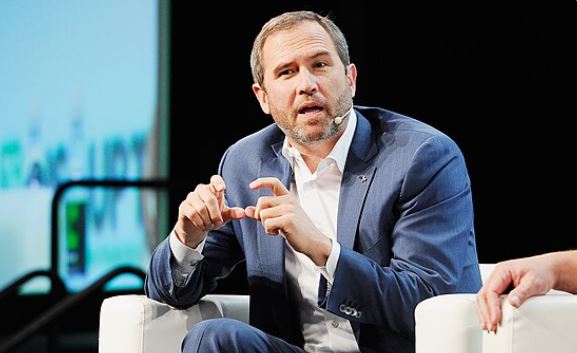
Brad Garlinghouse (브래드 갈링하우스), CEO of Ripple, said he is not an XRP maximalist and hopes bitcoin succeeds as well.
On May 6 local time, blockchain media outlet Cryptopolitan reported that Garlinghouse, in an interview at Consensus Miami 2026, dismissed the possibility that the crypto market will be reshaped into a single chain and said tribalism across the industry harms the market.
Garlinghouse said, "I have never been an XRP maximalist." He added, "A world where only one chain remains will not come. It will be a multichain world," and, "I hope bitcoin succeeds." XRP maximalism refers to a stance that views XRP as the only important cryptocurrency and interprets the market as a competitive structure against other assets.
He made clear, however, that Ripple’s business focus is XRP. Garlinghouse explained that XRP remains Ripple’s "North Star" and that acquisitions and new products are also focused on increasing the token’s utility. In January this year, he also defined maximalism on X, formerly Twitter, as "the enemy of crypto progress" and said he holds XRP, bitcoin and ethereum.
Ripple also presented corporate demand surrounding digital assets. In a Ripple survey of about 1,000 leaders in the global financial sector, 72 percent said digital asset solutions are needed to maintain corporate competitiveness. Some 74 percent cited stablecoins as a future tool for cash management, and 97 percent prioritized digital asset security over other factors. Some 71 percent preferred integrated service providers. Among fintech firms, 31 percent collected stablecoin payments on behalf of customers, and 29 percent were accepting them directly as a payment method.
On the direction of adopting artificial intelligence, Garlinghouse placed emphasis on business expansion rather than workforce cuts. He said 75 percent of Ripple’s code is written by AI or written with AI assistance, and that the productivity gains are being used for more product development and user growth. Garlinghouse said, "It is wrong to paint AI as something to fear," adding, "Ripple sees AI not as a tool for headcount reduction but as an opportunity for business expansion."
The remarks contrast with a trend in which some companies have moved to cut staff citing AI transitions and market conditions. Garlinghouse also pointed out that companies using AI as a justification for layoffs may be hiding bigger management problems behind technology.
On policy, he cited delays in the U.S. Congress’ handling of the CLARITY Act as a key variable. The bill’s core aim is to resolve a jurisdictional clash between the U.S. Securities and Exchange Commission and the Commodity Futures Trading Commission over whether crypto tokens are securities or commodities. Under the approach, tokens with investment characteristics would fall under the SEC, while the digital commodity spot market would be under the exclusive jurisdiction of the CFTC. Garlinghouse said, "If you ask whether I think it is perfect, no," but added, "Clarity is better than confusion." He went on to say, "If there is no progress within the next two weeks, the chances of passage will drop sharply."
On the same day, market attention also focused on a Nasdaq listing push by Evernode, which is supported by Ripple. Evernode is an XRP treasury specialist company that holds more than 473 million XRP, and it is backed by Ripple and SBI Holdings. The company said it appointed four new directors, including Ripple chief legal officer Stuart Alderoty, and is pursuing a Nasdaq listing through a merger with Armada Acquisition Corp II.
Evernode’s listing process is expected to be completed after SEC review. The plan aims to let investors gain exposure to XRP without directly investing in it through a publicly listed XRP-holding company, and it is expected to be a test case for broadening XRP’s access to institutional markets.
 Yoonseo Lee
yslee@d-today.co.kr
Yoonseo Lee
yslee@d-today.co.kr