
ADTechnology said on Monday it signed a 40 billion won turnkey contract with a U.S. AI fabless company. The contract covers development and supply of chiplets for a datacenter high-performance computing (HPC) system-on-chip (SoC). ADTechnology will integrate the entire process, from product design to tape-out and mass production, based on Samsung Foundry's 4-nanometre process.
The project involves developing a customised integrated SoC chiplet that implements high-bandwidth memory (HBM) and AI accelerator logic on a single chip. It applies a "big die-based chiplet" design technology optimised for AI datacenter environments by combining next-generation HBM with 2.5D packaging technology.
Big die-based chiplet design distributes large-scale computing across multiple dies, which is difficult to implement in an existing single-die structure. Combining it with 2.5D packaging technology can increase inter-die data transfer speeds while reducing power consumption. ADTechnology plans to secure both processing speed and power efficiency for AI datacenters with the configuration, the company said.
The companies aim to complete tape-out in the fourth quarter of 2026 and enter global mass production in 2028. The specific name of the U.S. AI fabless company was not disclosed.
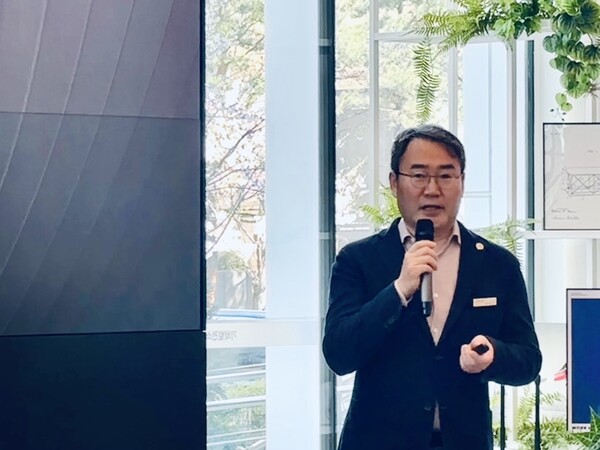
Chief Executive Joon-kyu Park (박준규) said design house integration capabilities have become more important than ever as global AI infrastructure rapidly shifts to customised "custom SoCs". He said the order shows ADTechnology's "unrivalled" technological competitiveness, spanning advanced processes and chiplet architecture, has been proven in the global market. He added the company would accelerate efforts to secure global big tech customers, including in North America, to strengthen its position as a global AI infrastructure partner.
 Daegeon Seok
d2dg@d-today.co.kr
Daegeon Seok
d2dg@d-today.co.kr