
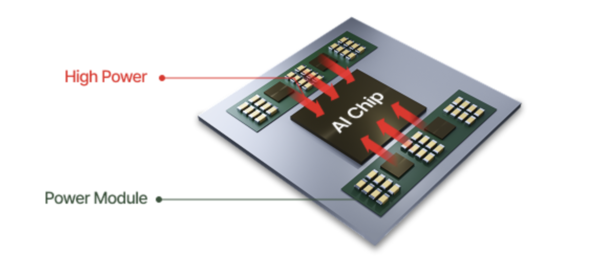
Samsung Electro-Mechanics plans to execute in the next 3 years investment equivalent to the past 10 years. Companywide capital expenditure (CAPEX) is expected to more than double from a year earlier. Five major brokerages simultaneously raised their target prices from the 600,000-won range to 1.05 million to 1.10 million won. Behind that is analysis that a triple phase of price increases, the unusual reason for the investment, has begun.
According to IBK Investment & Securities and iM Securities, Samsung Electro-Mechanics' CAPEX this year is more than double from a year earlier, and the scale of investment over the next 3 years also increases sharply compared with the past. The investment is order-based spending executed on the basis of long-term supply agreements (LTA) with AI big tech customers, meaning investment made when customers are confirmed.
Such confirmed demand is already becoming visible in first-quarter results through price increases and higher utilisation. First-quarter operating profit rose 39.9 percent from a year earlier to 280.6 billion won. Operating profit excluding a one-off retirement benefit expense of 71.4 billion won reached 352.0 billion won. First-quarter revenue also hit a record 3.2092 trillion won on a quarterly basis.
The engine supporting the investment stands out in multilayer ceramic capacitors (MLCC). According to SK Securities, first-quarter MLCC utilisation was 91 percent, topping 90 percent for the first time in 5 years despite the off-season. The ratio of orders received to shipments rose to around 1.1 to 1.2, signalling a deepening supply shortage. Inventory fell to about 4 weeks, below the appropriate 40-day level. Even after Japan's Murata declared there would be "no short-term price increase", Eugene Investment & Securities forecast Samsung Electro-Mechanics' MLCC average selling prices would rise 14 percent in 2026 and 15 percent in 2027.
The price trend is also extending to package substrates. First-quarter flip-chip ball grid array (FC-BGA) sales rose 21.6 percent from the previous quarter to 422.0 billion won, accounting for 58 percent of the package solution business. Daishin Securities forecast 2026 FC-BGA sales of 1.94 trillion won, up 66.7 percent from a year earlier. A revenue structure centred on PCs is reshaped, with servers and networks taking a 70 percent share in 2027. iM Securities analysed that the PC share in FC-BGA sales was close to 50 percent as recently as 3 years ago.
With full utilisation expected in the fourth quarter of 2026, there is also a view that new investment decisions will continue during the second quarter. According to materials from Japan's Ibiden, demand for IC package substrates for AI servers increases 1.8 times in 2026 and 2.5 times in 2027 compared with 2024.
The price increase trend is also appearing in BGA, which had been sluggish. BGA, with an operating profit margin stuck around 4 percent, faces rivals posting 15 to 23 percent, leaving more than 20 percentage points of room for profitability improvement, SK Securities analysed.
In addition, another change taking place beneath the surface alongside price shifts is a transition in the business model itself. According to iM Securities, MLCC transactions were typically short-lead-time deals in which customers buy only the quantities needed at the needed time, but on the first-quarter conference call management unusually repeated the terms "long-term supply agreement" and "binding".
As the amount of MLCC installed per AI server increases eightfold compared with general servers, and by more than 90 times at the rack level, the structure has shifted to one in which customers request advance supply plans over 2 to 3 years. With IC design to mass production typically taking 2 to 3 years, advance supply contracts for AI-use MLCC have effectively become essential, it said.
◆ Hidden traps behind the boom... CAPEX burden and polarisation in IT demand
Separate from signs of a boom, there are also many short-term variables. The burden most often cited in the market is cash flow and depreciation costs stemming from the surge in CAPEX. Operation of new investment is expected from 2028, leaving a period before then in which costs accumulate without revenue contribution. Differences between divisions are also a variable. According to IBK Investment & Securities, optical revenue is expected to fall 10.3 percent from the first quarter due to the off-season in the second quarter, and IT-related BGA volumes are expected to fall 7.8 percent. Ultimately, polarisation between AI infrastructure demand and IT and mobile demand is a short-term earnings variable.
The competitive environment is also showing signs of change. Murata declared a price freeze but carried out an emergency additional investment of 80 billion yen. It also revised up its forecast for the compound annual growth rate of AI server MLCC revenue to more than 80 percent from 30 percent. Eugene Investment & Securities analysed that Samsung Electro-Mechanics, which oligopolises the AI server MLCC market, will drive gains in average selling prices through improvements in its sales mix focused on high value-added and high-voltage products. It forecast the structure could shift to competition via product mix rather than simple price competition.
The inflection point is entry into full FC-BGA utilisation in the fourth quarter of this year and the timing of additional investment decisions just before that. Daishin Securities analysed that in 2028, when new investment comes online, it could become possible to rise to No.1 in FC-BGA for AI servers and data centres. An industry official said, "If the shift from short-lead-time transactions to an LTA-based order business is successfully achieved and becomes established, it will go beyond a parts company to become an AI infrastructure supply chain company."
 Daegeon Seok
d2dg@d-today.co.kr
Daegeon Seok
d2dg@d-today.co.kr