
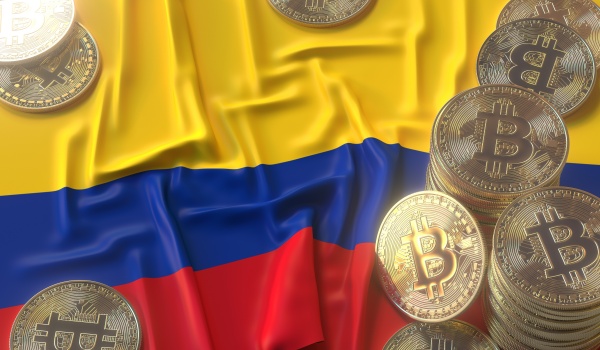
Colombian President Gustavo Petro said the country could develop its Caribbean coast into a hub for bitcoin mining.
Cointelegraph, a blockchain outlet, reported on Tuesday that Petro argued Colombia could use surplus renewable energy to attract foreign investment and spur local economic development.
In a recent post on X, formerly Twitter, Petro said Caribbean coast cities such as Barranquilla, Santa Marta and Riohacha could host bitcoin mining facilities. He said Colombia could follow examples in Venezuela and Paraguay in recent years by using its clean energy resources.
Petro said the plan could provide a major boost to development along the Caribbean coast. He also suggested the Wayuu community, Colombia's largest Indigenous community, could become a co-owner of the project. The idea is to attract the mining industry by linking regional development with the use of energy resources.
The remarks came in response to a post by Alessandro Cecere of Luxor Technology that referred to Paraguay. Cecere said Paraguay raised its share of global bitcoin hashrate to 4.3 percent after using hydropower from the Itaipu dam. That made Paraguay the world's fourth-largest mining country after the United States, Russia and China.
Markets are paying attention to the idea that countries with surplus electricity can turn it into cash flow. Jaran Mellerud of Hashlabs, managing partner, said mining could generate significant economic effects as emerging countries convert unused power into revenue. With U.S. commercial miners expanding into artificial intelligence and high-performance computing in pursuit of higher profitability, countries with low electricity prices also have room to take a larger share of the bitcoin network hashrate.
Colombia's power mix is also cited as a factor supporting the plan. A World Bank report released in April 2024 said up to 75 percent of Colombia's electricity comes from renewable energy. That is more than double the global average. Given that Petro has voiced concerns that fossil fuel-based bitcoin mining could cause global warming and climate collapse, renewable-based mining is presented as an alternative that reduces such environmental burden concerns.
Still, conditions for implementation are limited. Petro's term ends in August, leaving him only about 3 months to lead the mining plan himself. He will not run in the next presidential election scheduled for May 31 due to constitutional limits.
The possibility of a change in government is another variable. Kalshi data from prediction markets show left-leaning Senator Ivan Cepeda Castro and conservative free-market advocate Abelardo de la Espriella are being discussed as leading contenders. Neither candidate has so far made any meaningful public remarks about bitcoin or digital assets.
Since taking office in August 2022, Petro has shown a relatively neutral stance on bitcoin and the cryptocurrency industry. In that context, the comments are closer to a proposal to attract mining by emphasizing energy use and regional development rather than deregulation or institutional changes. Attention is expected to focus on whether the next government will carry the plan forward and whether surplus renewable power on the Caribbean coast will translate into actual mining investment.
 Jinju Hong
hongjj@d-today.co.kr
Jinju Hong
hongjj@d-today.co.kr