
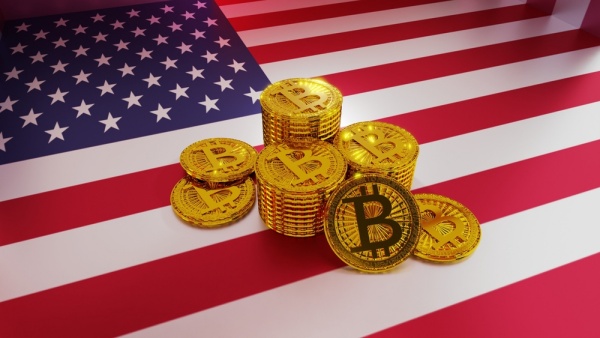
Additional announcements related to a U.S. strategic Bitcoin reserve are expected within weeks.
On May 7 (local time), blockchain outlet CoinPost reported that Trump administration crypto adviser Patrick Witt said at the Consensus conference hosted by CoinDesk that he intends to disclose new progress on the Bitcoin reserve in the coming weeks.
The remarks are taken as a signal of whether the U.S. government’s Bitcoin reserve initiative is moving into an actual phase of institutional preparation. Witt also said at the 'Bitcoin 2026' conference held in April that there had been "significant progress" related to the reserve, but he did not present specific implementation measures. He again did not disclose details, but he gave a relatively clear timing for a follow-up announcement, drawing market attention again.
The key point is that the U.S. government’s focus is on how to preserve Bitcoin it already holds and support it legally, rather than on plans to buy new Bitcoin. U.S. President Donald Trump signed an executive order in 2025 directing the establishment of a strategic Bitcoin reserve and set out a direction to hold cryptocurrencies seized through criminal and civil proceedings as national-level stockpiled assets.
In the market, expectations first formed that the government could actively buy Bitcoin, but the actual policy is moving around holding seized assets. The U.S. government is seeking ways to secure assets through a budget-neutral approach that does not add more taxpayer money, and legal and institutional arrangements must come first for implementation.
In this regard, Witt said the government is placing importance on protecting the Bitcoin it holds and making legal interpretations more firm. As a result, the announcement flagged for the coming weeks is likely to focus more on building a legal framework to maintain and protect existing reserves than on methods of acquiring new Bitcoin.
A gap between market expectations and policy reality is also emerging. The industry had high expectations for a scenario in which the U.S. government would directly buy Bitcoin, but for now the flow is that principles for managing held assets are being set out ahead of concrete purchase plans. In this situation, fatigue is also being voiced within the industry that progress on the reserve policy is slow.
The scale of U.S. government holdings is also drawing attention again. The U.S. government is currently storing 328,372 BTC. Still, the focus of this discussion is less on expanding holdings themselves than on under what legal status those assets will be stably maintained as national reserves.
Against this backdrop, legislation at the federal congressional level is also being mentioned. With lawmaker Mark Begich planning to submit a bill to codify the executive order, and with the executive order alone potentially limiting policy continuity, the point to watch is whether reserve operating principles will be specified in a separate law.
Ultimately, the meaning of the announcement depends on how the United States will institutionalise a Bitcoin reserve in practice. If the progress Witt mentioned and the coming-weeks announcement lead to legal arrangements and principles for protecting held assets, the U.S. Bitcoin reserve policy may be more likely to pick up speed first in building an institutional foundation rather than in new purchases.
 Yoonseo Lee
yslee@d-today.co.kr
Yoonseo Lee
yslee@d-today.co.kr