
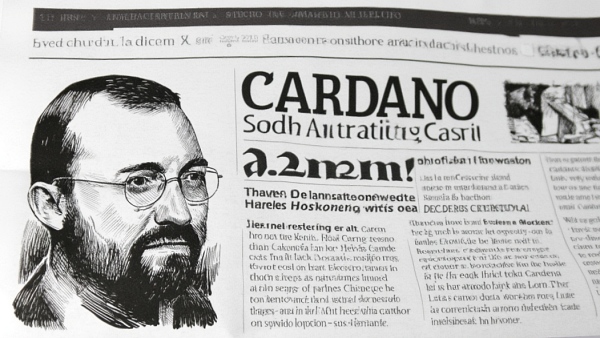
Cardano founder Charles Hoskinson (찰스 호스킨슨) again raised concerns about how Ripple runs XRP. He argued Ripple should build a structure to buy XRP directly in the market with part of the company's profits.
On April 28, blockchain outlet The Crypto Basic reported that Hoskinson said in an interview on the Paul Barron podcast that such an approach could make XRP a more attractive asset.
The debate began with a question about what steps Ripple could take for XRP utility if the CLARITY bill passes in the United States. Options mentioned included XRP buybacks or revenue-sharing staking. Hoskinson said he does not expect Ripple to adopt such a buyback system. He argued the company is likely to keep selling XRP to earn billions of dollars and use the funds to buy real-world assets at the company level.
He said XRP holders gain no benefit from ownership of the asset. He also argued Ripple has sold XRP for more than 10 years but kept the financial gains within company products such as RLUSD. When Barron mentioned that Ripple reinvests proceeds from XRP sales into the XRP Ledger ecosystem, Hoskinson said that was not enough and that business profits must be directly tied to XRP.
Hoskinson cited Hyperliquid as an example and said buybacks were effective in raising token value and investment appeal. He said if Ripple uses 20 to 30 percent of its profits to repurchase XRP, the relationship between XRP and the company would become far more attractive. He added that Ripple currently has no financial or legal reason to share that wealth with XRP holders.
He likened the structure to Block.one and EOS. Citing Block.one's statement that it had no fiduciary duty to EOS holders after raising $4 billion, he said it was a problem when corporate value and token-holder interests are separated. In another earlier interview, he has argued that Ripple held 70 to 80 percent of the total XRP supply at launch, giving it very strong control over the asset.
Ripple has not completely refrained from buying XRP in the market. Ripple has disclosed that it has bought XRP in the secondary market since at least 2020. The company explained the purchases were meant to support operation of its expanding On-Demand Liquidity (ODL) service and keep market liquidity healthy.
Figures have also been disclosed. Ripple bought $1.081 billion worth of XRP in the first quarter of 2022, and net sales were $273.27 million. In the second quarter of 2022, purchases rose to $1.717 billion, and ODL-related sales were about $2.126 billion, putting net sales at $408.9 million. Purchases in the first quarter of 2023 were $2.569 billion, and net sales were tallied at $361.06 million.
Ripple has said the purchases are meant to secure a stable supply of XRP needed for its payments business and reduce market shocks. But this differs from approaches such as typical corporate share buybacks that reduce circulating supply to lift value or return direct benefits to holders.
Hoskinson ultimately sees Ripple as accumulating within the company the benefits of business momentum created with XRP. He argued XRP holders in practice have only the token itself and access to the network. He compared the structure to a Tether-style model in which a centralised company absorbs most economic value and token holders cannot directly share in company profits.
The issue lies between the fact that Ripple is reinvesting funds into the XRP ecosystem and the fact that the funds are not a return structure directly tied to token holders. As a result, regardless of expanded use of XRP, how to bind the economic interests between Ripple and XRP holders is again emerging as a subject of debate.
 Yoonseo Lee
yslee@d-today.co.kr
Yoonseo Lee
yslee@d-today.co.kr