
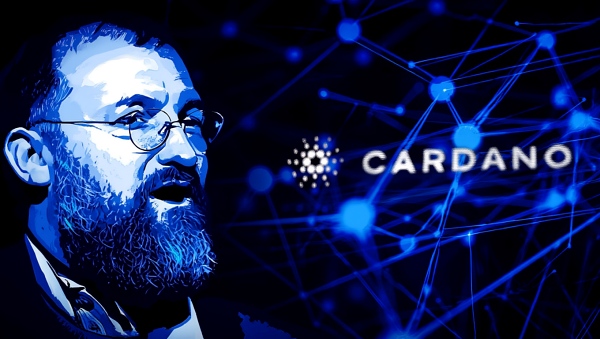
[Digital Today reporter Yoonseo Lee] Cardano founder Charles Hoskinson (찰스 호스킨슨) said the network’s slow growth was a choice made to preserve decentralisation and security.
On April 28, blockchain outlet The Crypto Basic reported that Hoskinson, in a recent livestream, described Cardano as an ecosystem built on blockchain “first principles” and said it prioritised structural stability over short-term growth speed. He added that, over the long term, this choice would be vindicated.
Hoskinson criticised rival networks for taking “shortcuts” to achieve faster transaction processing and expand their user bases. He argued that some chains, in exchange for scalability and developer inflows, accept service outages, restarts and relatively weaker security structures. Such choices may deliver results in the short term, he said, but they can expose networks to greater structural risks over time.
Cardano has grown on the back of a research-driven development strategy. It has focused on strengthening network reliability and resilience by emphasising peer-reviewed development, decentralised governance and a security-focused consensus structure. As a result, its launch and upgrade pace was relatively slower than competing chains such as Ethereum and Solana, but Hoskinson stressed that this was intentional.
He said recognition within the community remains that “Cardano will ultimately be vindicated.” He also highlighted that, while Cardano has not achieved adoption as broad as rival chains, its cautious approach helped it avoid major hacks or prolonged network outages.
On the market landscape, he pointed to community cohesion as a more important variable than rival chains. Some community members have recently raised concerns that Ethereum and Solana could threaten Cardano’s survival, but Hoskinson drew a line, saying those ecosystems cannot “kill” Cardano. He cited internal conflict, weakening community belief and loss of trust in the project as threats to Cardano’s future, rather than external competition.
Hoskinson said Cardano already has the technical foundation to sustain long-term growth. He said the remaining task is whether the community can continue to uphold the network’s vision and principles. He was read as delivering the message that Cardano’s future competitiveness depends less on user numbers or market share than on sustaining community cohesion while maintaining a decentralisation- and security-focused strategy.
The remarks were read as a rebuttal to criticism that Cardano lags rival chains in adoption speed. Hoskinson argued that a network that prioritises decentralisation and security over rapid growth can gain a more advantageous position as the industry matures. Still, it appears Cardano will also need to solve the challenge of maintaining internal community trust and cohesion, as well as competing externally for expansion, to vindicate this long-term strategy.
UPDATE: Charles Hoskinson says #Cardano $ADA "actually cares about decentralization and started from first principles. In the long term, we're going to be vindicated." pic.twitter.com/ZzNej94rZI
 Yoonseo Lee
yslee@d-today.co.kr
Yoonseo Lee
yslee@d-today.co.kr