
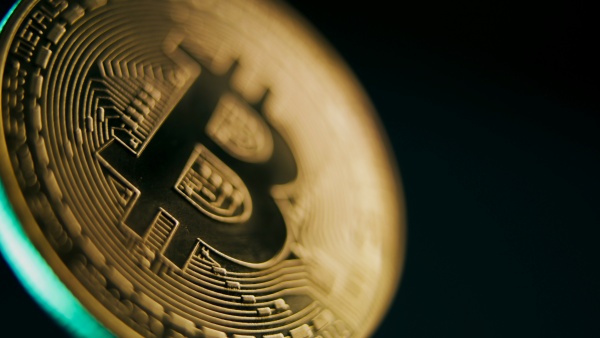
The U.S. Department of Defense (DOD) has been confirmed to be operating bitcoin (BTC) nodes directly and conducting network security tests. This is the first time military authorities have officially acknowledged it, as competition intensifies among countries to use bitcoin as a national security asset.
Cryptopolitan, a blockchain news outlet, reported on April 26 local time that Admiral Samuel Paparo Jr, who leads the U.S. Indo-Pacific Command (USINDOPACOM), said at congressional hearings that bitcoin is linked to national security.
At a Senate hearing, Paparo called bitcoin a "reality" and said it is a "valuable computer science tool for projecting power". He stressed that apart from its economic value, bitcoin has important technical applications in cybersecurity.
At a subsequent House hearing, it was also disclosed that the Defense Department is operating bitcoin nodes on its own. Paparo explained that the department is conducting "various operational tests to protect and defend networks using the bitcoin protocol."
The trend of viewing bitcoin as a national strategic asset is not limited to the United States. Iran is using bitcoin for payments by ships passing through the Strait of Hormuz, and Taiwan is considering bitcoin as a reserve asset to prepare for financial shocks. Russia has also said it plans to adopt bitcoin for international trade payments.
China's moves are more complex. China banned cryptocurrency activity in 2021, citing environmental issues and financial risks, but it is also known as the world's second-largest holder of bitcoin. There are also signs of internal moves to consider bitcoin as a reserve asset.
The conflict between the two countries has spread to legal disputes over bitcoin holdings. The U.S. Department of Justice (DOJ) said it seized about 127,000 BTC from Chinese businessman Chen Zhi (첸 지), who is accused of fraud. China has pushed back, claiming the United States obtained bitcoin through hacking in the past.
The U.S. Congress is also moving to reduce reliance on China in the mining supply chain. Senators Bill Cassidy and Cynthia Lummis have introduced a "Made in America" bill to pursue restrictions on the use of Chinese-made mining equipment. Bitmain's share of the global mining equipment market is estimated at more than about 80 percent.
The bill would ban the introduction of new Chinese-made equipment after 2027 and halt the use of existing equipment by 2030. It also includes a plan to offer tax benefits if mining companies sell the bitcoin they produce to the U.S. Treasury (USDT).
China, meanwhile, is further tightening regulation. It has introduced rules that fully ban online cryptocurrency promotion, and the measures are set to take effect on Sept. 30.
Ultimately, the United States is experimenting with bitcoin as a military and security technology and moving to make it a strategic asset, while China is taking a dual approach that combines internal regulation with an external holding strategy. The U.S.-China rivalry is spreading beyond currency and finance to the bitcoin network, the mining supply chain and competition over national reserves.
 Jinju Hong
hongjj@d-today.co.kr
Jinju Hong
hongjj@d-today.co.kr