
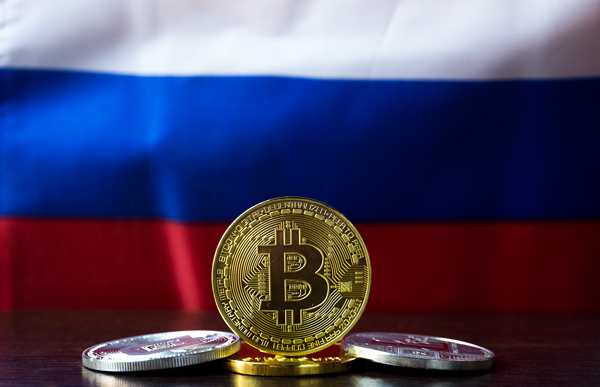
[DigitalToday reporter Jinju Hong (홍진주)] Russia is pushing legislation to bring cryptocurrencies into the formal sector, choosing an approach that strengthens market opening and controls at the same time.
On April 21 (local time), blockchain outlet Cryptopolitan reported that the State Duma, Russia’s lower house, passed the “Digital Currency and Digital Rights” bill in its first reading. The bill would legalise cryptocurrencies while concentrating control over the broader market in the central bank.
The core of the bill is to bring cryptocurrencies into the formal sector of the Russian economy while placing market control in the hands of the Bank of Russia. Under the plan, digital asset businesses including exchanges, brokers, banks and custodians would all need licences from the central bank.
The Bank of Russia would go beyond being a simple supervisory body and also take on the authority to determine which transactions are legal. For banks, it would set strict requirements for handling cryptocurrencies, and for non-credit institutions it could ban trading in certain coins. The structure effectively makes the central bank a gatekeeper for Russia’s regulated market.
The bill recognises cryptocurrencies as property but bans them as a means of payment. Only the rouble and the digital rouble would remain legal tender in Russia. Companies, considering the sanctions environment since the invasion of Ukraine, would be able to use digital assets in a limited scope such as foreign trade settlements. The permitted scope includes payments for the transfer of securities and digital rights, work compensation, consideration for providing services, and payments related to the transfer of information and intellectual property.
A legal route for individual investors is also expected to open. If the bill takes effect this summer, Russian citizens would be able to buy cryptocurrencies through licensed intermediaries. Investors would be divided into “qualified” and “non-qualified” categories. Non-qualified investors would need to pass a pre-test and would also face an annual investment cap. The central bank has proposed a limit of about 300,000 roubles.
The initial set of tokens allowed for distribution would also be tightly restricted. Eligible assets would need to meet criteria including an average market capitalisation over the past 2 years of at least 5 trillion roubles, average daily trading volume of at least 1 trillion roubles, and a minimum trading history of 5 years. Based on these standards, Bitcoin, Ethereum, Solana, BNB and Tron have been mentioned as possible inclusions, while the final list will be decided by the central bank.
Some in the market also point to excessively strong regulation. Earlier this month, the State Duma’s competition protection committee, which reviewed the bill, said there was a need to ease requirements for market participants. It warned that overly strict regulation could weaken the bill’s goals. It also added that, contrary to the intent to bring the cryptocurrency market out of the shadows, the law in its current form could leave many individuals and companies in a grey zone if it passes.
Discussions on safeguards are also continuing. Calls have been raised to financial authorities to expand judicial protection for cryptocurrency holdings, and some say the same protections should apply to non-custodial wallets.
The legislative timetable is tight. The new bill will go through revisions over the next few weeks before entering a second reading, with final adoption targeted by July 1, 2026. In parallel, amendments are also being pursued to impose criminal penalties for illegal cryptocurrency transactions. That bill includes fines of up to 1 million roubles and prison terms of up to 7 years.
Russia’s move is interpreted as an attempt to bring cryptocurrencies into the formal sector while also binding them within a strong regulatory framework. As market opening and tighter controls advance simultaneously, attention is expected to focus on whether the actual system design leads to more active investing.
 Jinju Hong
hongjj@d-today.co.kr
Jinju Hong
hongjj@d-today.co.kr