
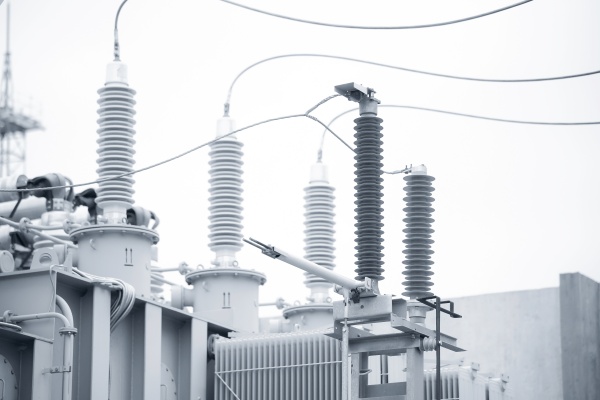
The U.S. hydropower industry is having difficulty replacing existing equipment and improving performance due to problems procuring large power transformers.
CleanTechnica, an electric vehicle-focused outlet, reported on July 20 local time that the National Renewable Energy Laboratory (NREL) recently released a report analysing supply chains for large power transformers used in hydropower facilities and presented nine key issues facing the industry.
Large power transformers are key equipment that raise the voltage of electricity produced by hydropower turbines to levels suitable for long-distance transmission. They are considered essential not only for hydropower plants but across the U.S. power grid. The report explained that more than 90 percent of electricity consumed in the United States passes through a high-voltage transformer at least once.
The report is a follow-up analysis to an earlier hydropower supply chain review conducted by the U.S. Department of Energy. The department's Water Power Technologies Office supported additional research to separately identify bottlenecks related to large power transformers.
The biggest issue is high import reliance. U.S. manufacturers of large power transformers were found to rely on imports for about 80 percent of key raw materials such as grain-oriented electrical steel and refined copper. Domestic production and assembly capacity is expanding, but it is insufficient to keep up with rapidly growing demand. In particular, facilities capable of producing ultra-high-voltage transformers are limited worldwide.
Procurement times are also long. Large power transformers with power capacity of 100 megavolt-amperes (MVA) take about 2 years and 6 months to 3 years from order to delivery, and ultra-high-voltage equipment can take up to 5 years. Price burdens have also grown. The report said prices for large power transformers have risen sharply since 2021, up about 80 percent as of 2025. The price per unit can reach up to $10 million.
A shortage of skilled workers is also a factor worsening supply disruptions. Hydropower parts manufacturers and suppliers are having difficulty securing specialised personnel with more than 10 years of experience. The report analysed this as reflecting the impact of skilled workers retiring or moving to other industries as related manufacturing shifted overseas over decades.
The location characteristics of hydropower plants are also a problem. Many hydropower dams are located in mountainous areas or remote regions, complicating transport of large transformers. Special transport vehicles are limited, and oversized cargo requires separate permits for each segment of its route. Safety and environmental regulatory procedures can also delay schedules during removal of existing transformers and installation of new equipment.
Changes in the trade environment were also cited as a variable that could increase costs. The report said the industry needs to continually monitor shifts in trade conditions that could raise copper and steel prices. Federal procurement procedures and domestic-content requirements could also deepen supply chain bottlenecks in the short term. That means domestic-content rules could add burdens when U.S. production capacity cannot meet demand.
The U.S. Department of Energy previously presented recommendations in an earlier supply chain report to address five major supply chain gaps in the U.S. hydropower industry. This report focused in particular on the large power transformer problem. The report stressed that a stable supply chain is important to support not only construction of new hydropower plants but also upgrades, repairs and relicensing procedures for existing facilities. Hydropower currently accounts for more than 6 percent of total U.S. power generation.
Researchers said the analysis could be used in designing government policies and incentives, loan programmes and technology investment. They said it could also help specify directions for expanding domestic parts production, strengthening manufacturing capabilities and training specialised personnel.
As a result, the challenges for the U.S. hydropower industry are expanding beyond simply securing transformer volumes to improving domestic production bases, specialised personnel, transport systems and procurement systems together. If bottlenecks in the supply chain for large power transformers are not resolved, schedules to replace ageing equipment and improve performance at U.S. hydropower plants could also be affected for a long period.
 Jinju Hong
hongjj@d-today.co.kr
Jinju Hong
hongjj@d-today.co.kr