
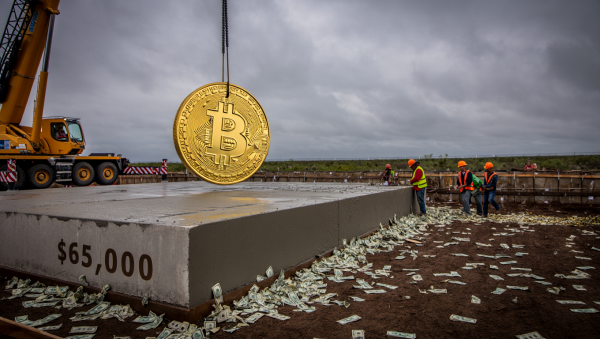
An analysis said Bitcoin (BTC) could build a base around $65,000. It said much of the selling pressure has been absorbed as short-term speculative money has largely exited.
On April 12 (local time), blockchain media outlet CoinDesk reported that Jurrien Timmer (주리엔 티머), global macro director at Fidelity Investments, called the current price action technically interesting and cited $65,000 as strong support.
Timmer described the market recently as "another bout of rough trading" but said the overall environment is not as bad as it looks. He said the market is pricing in the possibility that some form of solution to geopolitical tensions involving Iran could emerge soon.
After President Donald Trump announced a two-week ceasefire with Iran, markets responded quickly. International oil prices fell by more than 17%, while stock markets and crypto markets rebounded together. After that, U.S. West Texas Intermediate crude (WTI) traded around $100 a barrel, and bitcoin has been moving in the low $70,000s.
Timmer said bitcoin's recent moves have shown characteristics similar to gold. He said fund flows have changed from the past. He said short-term money moved quickly into gold around bitcoin's peak near $126,000 in October last year, but now the price is down 50 to 60 percent from the peak and there is not much short-term investment money, or "weak hands", left in the market.
He said selling pressure has largely eased, while gold, which has kept its upward momentum, could be more vulnerable to a pullback. He maintained a long-term bullish view on both bitcoin and gold. He said bitcoin may be forming a bottom but needs a new catalyst to move into the next upswing.
His assessment of the macro environment was relatively stable. Timmer said the stock market is pricing in a positive scenario to a large extent despite geopolitical shocks. He cited that the S&P 500's decline narrowed from 9 percent at one point to around 1 percent and that credit spreads are holding steady.
The Middle East situation could still worsen. Timmer warned that market shocks could grow if a worst-case scenario materialises in which Iran targets energy infrastructure in the Gulf region. About 20 percent of global crude supply passes through the Strait of Hormuz, and a prolonged disruption could deliver a shock of both high inflation and slower growth, he said.
Timmer said investors are responding differently than in the past. He said that after repeated "false alarms", including when the S&P 500 fell 21 percent from its high last year over tariff issues, market participants are less prone to panic than before. He said a "show me" stance has taken hold and that weak hands are not shaken out as easily as they used to be.
Interest rates were also cited as a key variable. The yield on the 10-year U.S. Treasury has risen to around 4.5 percent, and the possibility it could approach 5 percent is being raised, weighing on the market. Concentration in the tech-heavy "Magnificent Seven" was also cited as a potential risk.
Timmer interpreted this period of volatility not simply as risk but as opportunity. He said investors should supply liquidity rather than leave the market, and he stressed the need to maintain a diversified portfolio and respond strategically during volatile periods.
 Jinju Hong
hongjj@d-today.co.kr
Jinju Hong
hongjj@d-today.co.kr