
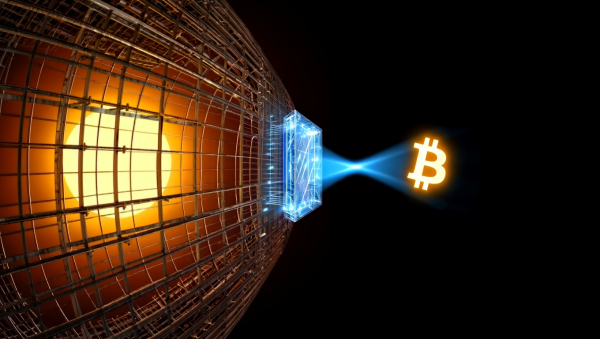
Academic analysis says the quantum-computing threat to Bitcoin (BTC) has been overstated. It said quantum attacks targeting mining, even if theoretically possible, would in practice require energy output comparable to that emitted by a star, making them highly unrealistic.
According to blockchain outlet CoinDesk on April 8, two recently published studies questioned the belief that quantum computers could collapse Bitcoin in a short period. The key point is that quantum threats to Bitcoin cannot be lumped together. The researchers said Bitcoin security should be viewed separately for wallets and mining, and that the realism of quantum attacks differs for each.
For mining attacks, Grover's algorithm is cited. It is a method of gaining an edge in the race to create blocks by speeding up hash calculations. The researchers said taking control of the network this way would require infrastructure that is effectively impossible to build. Because Bitcoin blocks are created about every 10 minutes, an attacker would have to perform enormous computation in an extremely short time.
Specifically, an estimate was presented that about 10^23 qubits and power of 10^25 watts would be required. That is close to a star's energy output and far exceeds the current Bitcoin network's power consumption of about 15 gigawatts. The researchers concluded that a quantum-based 51 percent attack is not simply a cost issue but would go beyond physical limits that human civilisation cannot bear.
Wallet security could be affected by Shor's algorithm. It breaks public-key cryptography and is seen as a more realistic long-term threat. In particular, cases where public-key information is exposed, such as reused addresses, could become targets for future attacks.
The researchers also raised the possibility that recent progress in quantum codebreaking has been exaggerated. They pointed out that existing experiments used simplified problems detached from real-world conditions or processed some calculations on classical computers. Some cases also drew criticism for inflating results by artificially simplifying the structure of prime factors.
Still, the researchers said the quantum threat itself has not disappeared. They presented wallets, rather than mining, as the more realistic long-term risk for Bitcoin. They said older or reused addresses already have public key-related information exposed on the blockchain, making them more likely targets if quantum computer performance improves sufficiently.
The researchers also said a recent paper by Google researchers suggested estimates of the computing power needed for such attacks could be greatly reduced. It presented a scenario in which codebreaking could be possible within minutes. But the paper also said building such a machine is currently physically impossible, because engineering challenges remain unresolved, including lasers to control qubits, readout speed and operating tens of thousands of atoms simultaneously.
The market is also placing more weight on wallet defence than on the possibility of an imminent mining collapse. Traders see a low chance that Bitcoin will switch its mining algorithm before 2027, while pricing in about a 40 percent chance of upgrades such as BIP-360 to reduce wallet risks. The quantum threat is real, but it remains far from a stage where it can directly bring down Bitcoin.
 Jinju Hong
hongjj@d-today.co.kr
Jinju Hong
hongjj@d-today.co.kr