
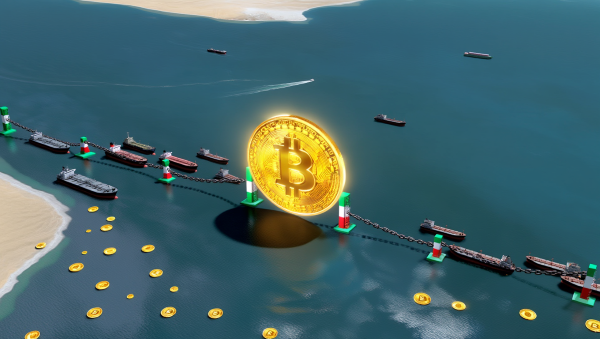
[DigitalToday intern reporter Seung-a Yoo] Iran is considering a plan to impose a toll in cryptocurrency on oil tankers passing through the Strait of Hormuz.
On April 8 local time, IT outlet Ars Technica reported that Iran presented prior approval, cargo screening and digital-asset payment as conditions for passage to maintain control of the key maritime route even during a two-week ceasefire period.
Hamid Hosseini (하미드 호세이니), spokesperson for the Iranian Oil, Gas and Petrochemical Products Exporters Union, said all tankers must submit cargo information by email before passage and would be charged a cryptocurrency-based toll after screening. The toll is $1 per barrel of crude, or about 1,480 won, and empty tankers can pass without additional restrictions.
Iran stressed that the purpose of the measure is security control. Hosseini said, "To prevent the transfer of weapons, we must monitor vessels moving through the strait," and added, "All ships can pass, but procedures take time and we will not rush." Passage conditions are decided by the Supreme National Security Council.
The introduction of cryptocurrency payments reflects an intent to evade sanctions. Iran plans to require screened ships to pay costs immediately in bitcoin, aiming to reduce the risk of tracking or asset seizure. It was also raised as a possibility that ships could be required to use a northern route closer to Iran's coastline.
The crypto market reacted immediately after the news became known. Bitcoin briefly rose above $72,000, then pared gains and is now trading at $71,342. Ethereum and Solana also rose more than 7 percent each.
Later the same day, however, Iran said it would completely halt tanker passage through the Strait of Hormuz in response to Israel's air strikes in Lebanon. It also broadcast an English warning to ships in Gulf waters that they could be subject to military attack if they pass without Iranian approval. The recording included the message, "Ships attempting to pass without permission will be destroyed."
In markets, cautious views are dominant on the possibility of a resumption of passage. Maersk (머스크), the world's No. 2 shipping company, said it is checking the passage conditions and that while the ceasefire may provide some opportunity, route safety has not been fully secured. It plans to operate cargo transport conservatively for the time being.
A backlog is worsening on the ground. About 175,000,000 barrels of crude and refined products are currently waiting in Gulf waters aboard 187 tankers. The industry sees 300 to 400 ships preparing to move as soon as passage resumes.
Easing the bottleneck is expected to be difficult in the short term. Martin Kelly (마틴 켈리), head of advisory at EOS Risk, said, "It is impossible to process the ships currently waiting within two weeks." The number of ships that can pass per day is about 10 to 15, far below 135 a day before the war.
Control of the strait is expected to be a key issue in future negotiations as well. U.S. President Donald Trump demanded Iran's "complete, immediate and safe opening of the strait" as a ceasefire condition. Iran's Supreme National Security Council, in contrast, presented a negotiating proposal that includes a new 'safe navigation protocol' coordinated with the military. Gulf countries such as Saudi Arabia, Qatar and the United Arab Emirates have strongly opposed the possibility that Iran could maintain control of the strait.
 Seung-a Yoo
ysah@d-today.co.kr
Seung-a Yoo
ysah@d-today.co.kr