
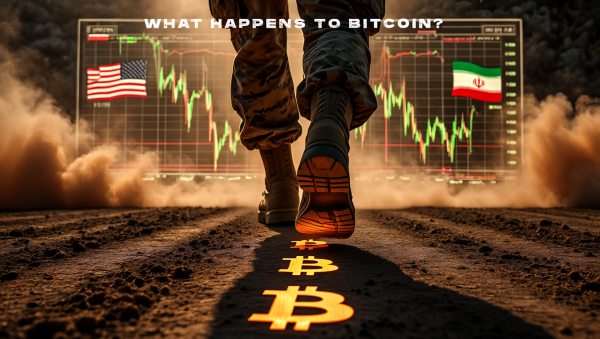
[DigitalToday reporter Jinju Hong (홍진주)] Global asset markets swung sharply as hopes rose for a last-minute diplomatic deal between the United States and Iran. As prospects of easing Middle East tensions emerged, oil prices tumbled and bitcoin (BTC) climbed back above $70,000.
On April 7 (local time), blockchain outlet BeInCrypto reported that fears of supply disruptions and a full-blown clash that had weighed on markets were quickly reassessed toward easing tensions as signs of progress in talks emerged.
U.S. outlet CNN, citing regional sources, reported that "good news is expected to come soon from both sides." Expectations grew that a deal could be reached before a deadline presented by U.S. President Donald Trump, and market sentiment flipped after fears of escalation only hours earlier.
Markets reacted immediately. Bitcoin quickly erased intraday losses, rebounding to around $69,900, while international oil prices plunged, giving back most of their earlier gains. The move was seen as traders starting to assign a lower likelihood to supply disruption scenarios such as a closure of the Strait of Hormuz.
Trump's "deadline pressure" was behind the volatility. On April 7, Trump set 8 p.m. Eastern time as the deadline for Iran to accept a U.S. proposal, which was reported to include reopening the Strait of Hormuz. He also warned of the possibility of large-scale strikes targeting key infrastructure, including power plants and transport networks, if Iran refused.
Iran responded by signaling regional retaliation, and as tensions rose, oil prices briefly surged and volatility widened across risk assets. As the deadline neared, mediation diplomacy also accelerated. Pakistan stepped in as a key mediator and formally requested a two-week extension of the negotiating deadline, and Pakistan's Prime Minister Shehbaz Sharif (셰바즈 샤리프) proposed a temporary ceasefire and reopening of the Strait of Hormuz as a "goodwill measure." The White House said Trump was reviewing the proposal, and Iran was reported to have sent a signal that it was considering the extension.
Sharif stressed that diplomatic efforts have "the potential to lead to tangible results in the near future."
Separately, reports said the United States and Iran had effectively agreed to a two-week ceasefire and reopening of the Strait of Hormuz. After Trump declared a halt to attacks on Iran on condition of a two-week ceasefire and reopening of the strait, Iran also confirmed that the two countries had agreed to a two-week ceasefire as announced by Trump.
Still, the agreement is a temporary step in the form of a two-week ceasefire, making any further progress in talks a key variable that will shape market direction. If the ceasefire period fails to produce meaningful diplomatic results, an analysis said, the possibility of tensions flaring again cannot be ruled out.
Markets are quickly pricing out the worst-case scenario, but assessments say whether the agreement proves only a temporary patch or leads to longer-term easing of tensions will depend on the outcome of further talks.
 Jinju Hong
hongjj@d-today.co.kr
Jinju Hong
hongjj@d-today.co.kr