
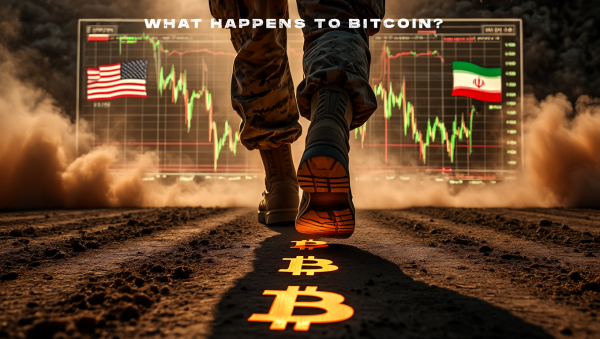
Bitcoin (BTC) rose overnight on expectations of a U.S.-Iran truce, briefly edging close to $70,000. On April 6, blockchain outlet Coindesk reported that risk appetite spread across markets after Reuters reported that “a U.S.-Iran truce plan could take effect on Monday.”
The strength spread across altcoins. The Coindesk20 index and XRP each gained about 4 percent, and ether (ETH) jumped more than 5 percent. Solana (SOL) also rose about 3 percent, moving higher in tandem. In traditional markets, risk-on sentiment strengthened, with Nasdaq 100 futures up 0.8 percent.
Derivatives indicators also supported the mood. Bullish signals were detected in the bitcoin futures market, and the 30-day bitcoin implied volatility index extended its decline. Lower volatility is read as supporting short-term investor sentiment.
Still, a key variable is that this rally leans heavily on expectations that the truce news will solidify as fact. Reports related to the truce often stopped at citing anonymous sources, and there were cases in which Iran rebutted or denied them. If the same pattern repeats, markets that tilted toward risk appetite could quickly reverse.
Even if a truce is reached, its durability is unclear. It is not certain whether a U.S.-Iran truce would be binding on Israel. It also cannot be ignored that U.S. President Donald Trump mentioned “large-scale strikes on Iranian civilian infrastructure” over the weekend, raising pressure.
Oil prices also resurfaced as a burden. The Organization of the Petroleum Exporting Countries (OPEC) decided to raise May crude production quotas by 206,000 barrels per day, but an assessment emerged that it was largely a symbolic step and would not ease energy market tensions. Bloomberg reported that Saudi Arabia raised May prices for Arab Light to Asia to a “record premium” versus the Middle East benchmark, which is interpreted as a factor that could stoke global inflation pressure.
Some observers also saw a sharp rise in oil prices as approaching a danger zone. The 12-month rate of change in oil prices stood at about 92 percent, and there were cases in the past where stock market collapses coincided when this indicator neared 100 percent. Commodities analyst Jack Farndon said, “Since 1987, every major market collapse has been preceded by one signal.”
This rebound has been supported by expectations of easing tensions in the Middle East and bullish derivatives signals, but it is too early to conclude it is a sustained uptrend given lingering uncertainty over geopolitical variables and the burden of oil prices. Risk assets, including bitcoin, could see short-term volatility widen again depending on the related news flow, and markets are likely to remain sensitive for the time being.
 Yoonseo Lee
yslee@d-today.co.kr
Yoonseo Lee
yslee@d-today.co.kr