
South Korea's financial authorities will build an always-on system to check user assets at digital asset exchanges and sharply strengthen internal controls to the level of financial firms. The measures follow a recent mistaken payment incident at Bithumb and are aimed at fixing structural problems and restoring market trust.
The Financial Services Commission said it held a meeting on Sunday at the Government Complex Seoul, chaired by Secretary General Shin Jin-chang (신진창), with the heads of five digital asset exchanges and the Digital Asset eXchange Alliance (DAXA) attending.
In opening remarks, Shin said inspections by an emergency response team found structural problems accumulated at exchanges beyond human error, the apparent cause of the mistaken payment incident. He stressed that a fundamental overhaul of exchanges was unavoidable, with 11 million users keeping digital assets worth about 70 trillion won.
The emergency response team inspected the status of user asset custody and internal control systems through on-site checks and written surveys from Feb. 10 to March 6.
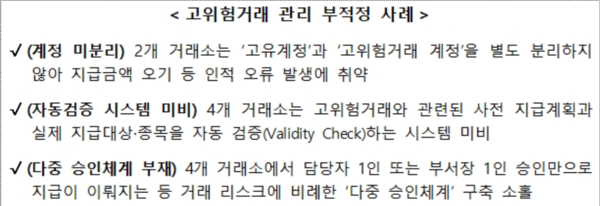
The inspections found many exchanges conducted balance reconciliations only once a day, limiting timely responses. They also found insufficient control measures, including non-segregation of accounts, in high-risk transaction handling processes that require manual work.
The commission also found weak operations, such as limited compliance monitoring or omitted checks, despite the industry having voluntary standard internal control guidelines.
The financial authorities decided to require all exchanges to build an always-on balance reconciliation system on a five-minute cycle. They will also specify standards for automatically blocking transactions when large-scale discrepancies are found in reconciliation results. They will shorten external accounting firm due diligence checks to monthly from quarterly and expand the scope of disclosures.
They will also set accident-prevention standards, including separating accounts by high-risk transaction category and building a validity verification system. They plan to require third-party cross-checks at the stage where staff enter payment instructions, and to encourage exchanges to build multi-level approval systems by payment amount.
Internal control systems will also be raised to the level of financial firms. The authorities plan to establish a standard compliance monitoring programme to strengthen checks for violations of internal control standards and shorten the inspection reporting cycle to regulators to every six months from once a year.
The financial authorities and DAXA plan to complete self-regulatory rules within April and finish building computer systems for always-on balance reconciliations by May.
Separately, the Financial Supervisory Service plans to review whether there were violations of the Virtual Asset User Protection Act based on problems confirmed through an inspection of Bithumb, and then begin sanctions procedures.
 Oh Sang-yeop
yub@d-today.co.kr
Oh Sang-yeop
yub@d-today.co.kr