
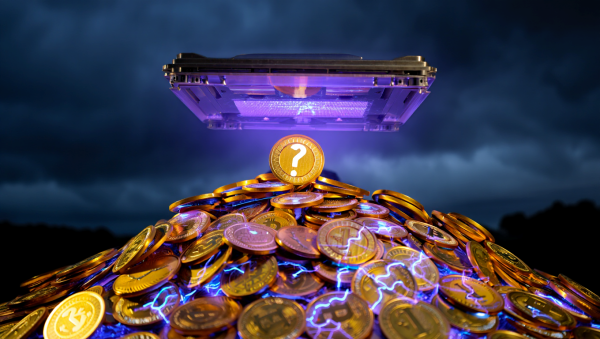
Dormant risks in the bitcoin (BTC) ecosystem have resurfaced. Analysis warning that, if quantum computers advance enough to reverse-engineer private keys, about 6.7 million to 6.9 million BTC are stored in addresses that could be exposed has raised concerns that these holdings could become the largest hacking target in financial history.
On March 31, blockchain outlet BeInCrypto reported that a paper released by Google Quantum AI estimated that about 100,000 long-inactive 'dormant' addresses could be vulnerable to quantum attacks. It said the amount of bitcoin held in those addresses totals about 6.7 million BTC. Some holdings are also reported to include early coins believed to be held by Satoshi Nakamoto.
The key point is that these assets could be attacked even while at rest, without making transactions. Previously, the main risk window was seen as the moment users create transactions and expose public keys. The researchers said that, if sufficiently powerful quantum computers emerge, private keys could be derived using only information already disclosed on the blockchain. In that case, assets could be stolen even if the owner takes no action.
Vulnerability is concentrated in coins created in 2009 to 2010, the early mining period known as the 'Satoshi era.' The Pay-to-Public-Key (P2PK) method used then records public keys directly on the blockchain, allowing anyone to verify them permanently. The researchers said that if quantum computers use the Shor algorithm, private keys could be reverse-engineered from those public keys.
Addresses that still hold the original early mining reward unit of 50 BTC are concentrated in certain ranges, and many are assessed to have remained unmoved for more than 10 years. The researchers estimated about 1.7 million BTC are locked in P2PK scripts alone. They added that the total exposed holdings could reach as much as 6.9 million BTC when address reuse is also considered.
The problem is that the vulnerability is hard to fix through upgrades. Google said that unlike active wallets, long-inactive addresses cannot be migrated to post-quantum cryptography unless owners move their keys themselves. That leaves the coins as fixed targets whose risk grows over time.
The market is also raising concerns and calling for responses. Matt Hougan (매트 호건), chief investment officer at Bitwise, said, "Progress by Bitcoin Core developers on quantum issues is important." He added, "More information being disclosed and responses moving forward would be a positive signal for the market."
The report also raises social and institutional questions beyond technical issues. If quantum computers actually reach this stage and can steal vulnerable coins, the question is how to handle it. Some mention burning the coins at the protocol level or even the idea of 'digital salvage' that would create a regulated recovery system.
The analysis highlights another reality facing the bitcoin ecosystem. It says forgotten coins that do not move are not simply relics of the past, but remain so-called 'quantum mines' that could explode at any time depending on future technological changes.
 Jinju Hong
hongjj@d-today.co.kr
Jinju Hong
hongjj@d-today.co.kr