
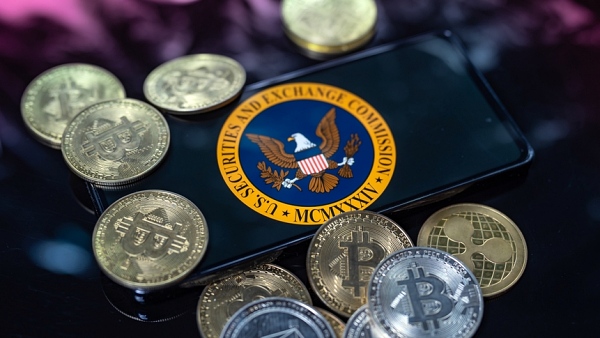
The U.S. Securities and Exchange Commission has approved Nasdaq's plan to tokenise securities, bringing blockchain into the centre of the U.S. stock market, blockchain media outlet CoinDesk reported on March 20 local time.
The approval allows tests of a system that issues certain stocks and exchange-traded funds as blockchain-based tokens and trades them alongside existing shares. Investors can keep tokenised versions of securities in digital wallets, and settlement is handled by the Depository Trust & Clearing Corporation (DTCC).
One reason Wall Street is moving into securities tokenisation is that it could enable 24-hour trading. Traditional stock markets have set trading hours and settlement cycles that take days, but using blockchain makes instant settlement and round-the-clock trading possible.
Val Gui (발 구이), head of Kraken's securities tokenisation platform xStocks, called it a sign that a $126 trillion stock market is moving onto blockchain. Ian De Bode (이안 드 보드), CEO of Ondo, also said progress toward a 24-hour market is positive, highlighting that overseas investors in particular will be able to access U.S. stocks around the clock.
Nasdaq plans to work with Kraken to distribute stock tokens globally. But the model does not replace the existing financial system. Blockchain serves only as an alternative record for shares, while trading still takes place through brokers and settlement remains with DTCC.
Maylea Ma (마일리아 마), vice president at 1inch, analysed that Nasdaq is making limited use of blockchain's advantages within the existing traditional finance, or TradFi, system. Investors can experience faster settlement and flexible ownership, but they still have to go through intermediaries. Without linking on-chain liquidity and non-custodial trading, efficiency gains will remain incremental, she said.
While the United States is moving into securities tokenisation, some say it is slower than other countries. Jesse Knutson (제시 크누슨), chief operating officer at Bitfinex Securities, said the United States is making regulatory progress but still lags behind other countries.
Tokenised securities are already being issued and traded in Kazakhstan and El Salvador, and Switzerland and the United Arab Emirates have also moved quickly to put rules in place for digital asset trading. With the world's largest stock market, the United States has less incentive to convert its existing system to blockchain, leaving change likely to proceed slowly.
Still, the SEC decision shows tokenisation is approaching public markets, and the process is expected to be driven by existing financial institutions and regulation.
 Hyunwoo Choo
cookinpapa@d-today.co.kr
Hyunwoo Choo
cookinpapa@d-today.co.kr