
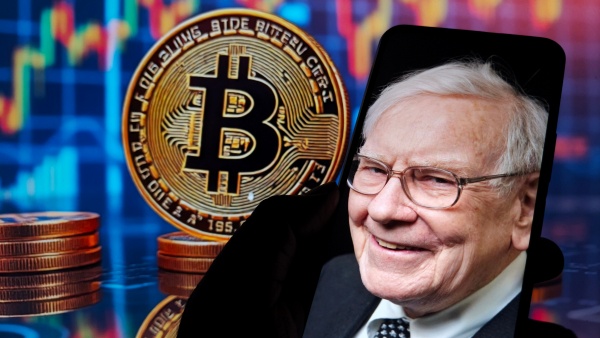
Berkshire Hathaway, led by Warren Buffett, is at a pivotal moment after building a record cash pile. As Buffett, known as the "Oracle of Omaha", retires at age 95, Berkshire is entering a new leadership structure with about $382 billion in cash and short-term Treasury bills.
That amount is enough to buy about 480 S&P 500 companies, and some in the market interpret it as a sign Berkshire is preparing for a major market correction or financial instability. Berkshire has remained a net seller of stocks for 12 straight quarters and has become the world’s largest net seller, leading some to see the higher cash weighting as a strategic move beyond conservative management.
On Jan. 1, local time, blockchain outlet BeInCrypto said Buffett’s retirement is seen as one of the biggest turning points in Berkshire’s history. Over the past 60 years, he transformed Berkshire from a textile company into a global financial and industrial holding company. Berkshire now holds more than 200 subsidiaries, including railroad company BNSF, auto insurer GEICO and Berkshire Hathaway Energy. It also holds large stakes in major companies including Apple (about $65 billion), American Express ($58 billion), Bank of America ($32 billion) and Coca-Cola ($28 billion).
Berkshire’s core source of funds remains its insurance business. Stable premium income generated by insurance subsidiaries National Indemnity and GEICO serves as the financial engine that enables stock investments and corporate acquisitions. Some analysis also says the current scale of cash holdings is similar to the period just before the COVID-19 pandemic in 2020, suggesting the possibility of a market correction.
Market attention is now focused on how Greg Abel, set to take on the next leadership role, will use the massive liquidity. Abel, who has overseen non-insurance businesses, built his career in the energy industry and is seen as stronger in real assets and long-term infrastructure investment than in traditional stock investing. If the opportunity cost of holding cash rises as interest rates fall, his decisions are likely to shape Berkshire’s investment direction.
Analysts believe Abel could maintain Buffett’s traditional value-investing philosophy while keeping room to acquire companies at discounted prices in a market crash. UBS’s Brian Meredith said, "Buffett’s personal network will disappear, but it will be an important test whether Berkshire can play a market stabiliser role as it did during the 2008 financial crisis."
Cryptocurrency investors are also watching Berkshire’s moves. Buffett once strongly criticised Bitcoin, comparing it to "rat poison", but Berkshire has indirect exposure to the digital asset ecosystem through an investment in Brazil’s digital bank Nu Holdings. Berkshire invested an additional $250 million after an initial $500 million investment in 2021, and Nu Holdings shares rose more than 50 percent in 2025 alone.
Berkshire has sold about $184 billion of stocks over the past three years, becoming the world’s largest net seller. Its current $382 billion in cash and short-term Treasuries implies strong buying power in a market crash. That coincides with a trend of institutional investors building cash piles observed in the cryptocurrency market, and is being interpreted as a broader risk-off signal.
Berkshire’s strategy sends a clear message. Even the most conservative value investors are accumulating cash to prepare for market volatility. Historically, Berkshire has underperformed the S&P 500 only 20 times since 1965, and its average annual return of 19.9 percent far exceeded the S&P 500’s 10.4 percent over the same period.
BeInCrypto said how Berkshire will handle digital assets after Buffett remains uncertain, but if Abel’s leadership takes a more cautious approach, it cannot be ruled out that the crypto market could gain another ultra-large institutional investor.
 Jinju Hong
hongjj@d-today.co.kr
Jinju Hong
hongjj@d-today.co.kr