
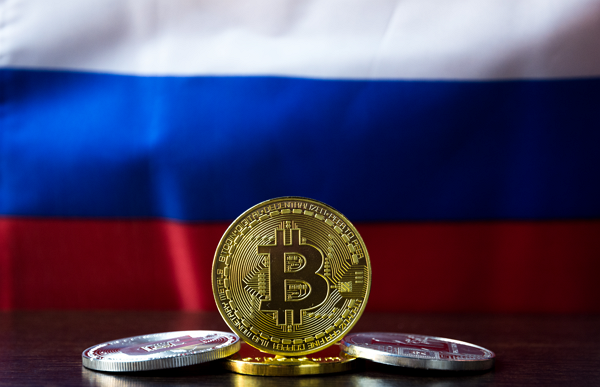
Russia has about 20 million cryptocurrency users, and the total value of digital assets they hold is estimated at more than $44 billion, a tally showed.
Blockchain media outlet Cryptopolitan reported on Sept. 22 that Russia's finance ministry expects the market to grow further after the start of its incorporation into the formal system. It projected that 10 million new users could be added in 2027 alone.
Ivan Chebeskov (이반 체베스코프), a deputy finance minister, said Russians' cryptocurrency investment stands at about 3.7 trillion roubles. Economic outlet RBC reported that crypto trading in Russia averages 50 billion roubles a day.
The figures coincide with the timing of Russia's push to bring crypto trading into the formal system. Russia began enforcing the Law on Digital Currency and Digital Rights on Sept. 1. The law legalises crypto-related transactions such as investing, buying and selling, and exchanging, and sets a legal basis for exchange licences, the establishment of digital depositories, and the provision of related services by intermediaries such as banks and brokers.
The central bank is also detailing the launch schedule for the crypto market. Vladimir Chistyukhin (블라디미르 치스튜힌), a deputy governor of the central bank, said registration and licensing could be available by the end of 2026. So far, the only cryptocurrency activity recognised as a legal business in Russia under a separate regulatory framework has been bitcoin mining, which took effect in November 2024. Privately issued blockchain-based "digital financial assets" have been allowed under a separate law since January 2021.
The Russian government is also seeking to bring assets and users that remain on foreign infrastructure into its domestic regulatory system. Chebeskov said Russian residents hold more than 10 million cryptocurrency wallets overseas. Some investors still use domestic platforms that have yet to be licensed, while others rely on foreign infrastructure, making it difficult to compile an exact user tally, he said.
The government says it has limitations in accurately grasping the number of users and the size of assets. That is because some investors still use unlicensed domestic platforms and other users rely on foreign infrastructure. As a result, it remains uncertain how many users will come under the state's management once regulation is fully applied.
Under the new system, retail investors can buy up to 300,000 roubles a year in digital assets per intermediary. Coins can be transferred to overseas-hosted wallets, but transactions under Russian jurisdiction can be handled legally only through approved service providers. Custody must also be done through registered depositories, and cross-border transfers are allowed only to wallets on regulated overseas platforms that cooperate with licensed local institutions.
Reporting obligations for tax residents have also been tightened. Chebeskov stressed that transactions linked to addresses not managed by domestic depositories must be reported to the Federal Tax Service (FNS). He also warned that digital depositories bear no responsibility even if overseas issuers freeze assets and losses occur. He said such cases have already occurred with stablecoin holdings in the past.
Major purchases allowed for retail investors in Russia include bitcoin, ethereum and tether's dollar-pegged stablecoin USDT. The structure shows the government's direction of bringing Russian users and assets that remain in overseas wallets into the domestic regulatory system. Whether the projected increase in users in 2027 materialises will depend on how quickly exchange licences are issued and whether domestic infrastructure takes root in Russia.
 Yoonseo Lee
yslee@d-today.co.kr
Yoonseo Lee
yslee@d-today.co.kr