
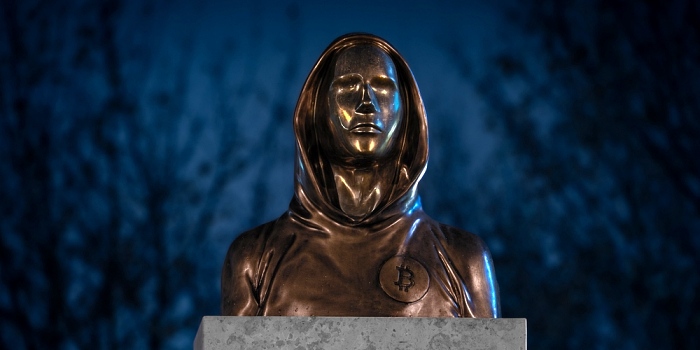
Whether about 1.1 million bitcoin mined in the early days were actually held by Satoshi Nakamoto still relies on circumstantial evidence.
As of Sept. 22, blockchain media outlet Cointelegraph reported that on-chain analysis strongly points to the existence of early large-scale mining, but it has not separately proved that the miner was actually Satoshi.
The debate was reignited on Sept. 5 this year when 600 bitcoin mined in March 2010 moved after 16 years. The amount came from coins issued as rewards for 12 blocks generated over 4 days, and the private-key holder used them sequentially within 30 minutes. But that movement alone makes it hard to conclude that Satoshi's coins moved.
Cryptocurrency research firm Bitquery viewed 10 of the 12 blocks as not matching the early mining pattern known as "Patoshi". It classified the remaining 2 as a weak match that could occur by chance. Gaurav Agrawal (가우라브 아그라왈), a Bitquery analyst, said the transactions showed signs of using modern wallet software, suggesting at least that the private key was moved to a new environment.
The key point is that what the blockchain shows is control of a key, not a person. Agrawal explained that private keys can be inherited, sold, stolen or recovered from used storage devices, and that the chain only records the fact that someone had it. Therefore, the movement of long-dormant bitcoin alone cannot identify the original owner.
The estimate of 1.1 million bitcoin began with an analysis presented in 2013 by researcher Sergio Demian Lerner (세르히오 데미안 레르네르). He found a unique pattern in early bitcoin blocks that distinguished it from other miners, and based on that he estimated a single mining entity amassed about 1.1 million bitcoin. Lerner added the caveat that while he still believes the calculation is accurate, it is circumstantial evidence without mathematical proof or direct testimony.
Bitquery re-analysed the first 54,316 blocks and reconstructed the pattern. It matched 99.2 percent of the public Patoshi list and found no exceptions in checks of the time ordering of 5,836 adjacent block pairs.
But the total differed depending on the criteria applied. A strict application came to less than 900,000 bitcoin, while the broadest estimate was about 1.17 million bitcoin. Existing estimates of 1.0 million to 1.13 million bitcoin fell within that range.
Agrawal explained that the conventional wisdom that "Satoshi holds 1.1 million bitcoin" should be examined as 3 separate claims. He said there is strong evidence the coins were mined from a single machine, but the claim that the machine was owned by Satoshi remains circumstantial. He also said the fact that the coins have not moved does not by itself prove that Satoshi still controls the private keys.
Bitquery also focused on a transaction on May 17, 2010 that was not covered in existing public research. At the time, 600 bitcoin from early mining rewards moved twice at roughly 1-hour intervals. That was interpreted as showing that rewards mined in early and late 2009 were gathered in the same wallet. Agrawal assessed it as the clearest case in which on-chain records can confirm that mining rewards across multiple blocks are connected, beyond statistical patterns.
By contrast, the 600 bitcoin that moved in September this year was analysed as not belonging to Patoshi-mined coins. Newly identified on-chain data also provided no basis to directly link that amount to Satoshi holdings. In the end, the conclusion was that it is highly likely early large-scale bitcoin holdings came from a single mining entity, but decisive evidence proving that entity was Satoshi is still absent.
 Yoonseo Lee
yslee@d-today.co.kr
Yoonseo Lee
yslee@d-today.co.kr