
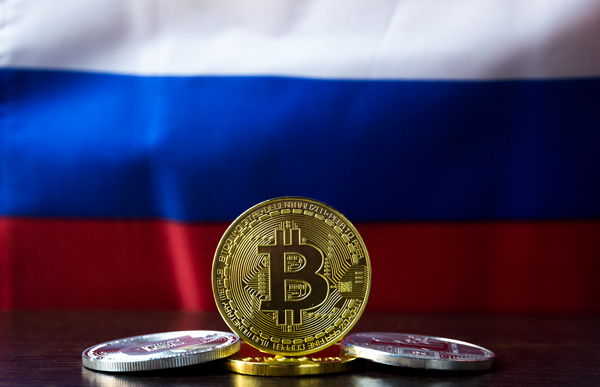
Russia could have an institutional foundation in place by the end of 2026 to run its cryptocurrency industry legally.
On Sept. 21, blockchain outlet Bitcoin Magazine reported that Vladimir Chistyukhin (블라디미르 치스튜힌), a deputy governor of the Bank of Russia, said relevant regulation is proceeding as scheduled and detailed preparations needed to operate the industry could be completed by year end.
Russia is pushing ahead quickly with cryptocurrency-related legislation. Russian President Vladimir Putin (블라디미르 푸틴) signed a bill in August to institutionalise regulation of digital currency and digital rights. The use of bitcoin as a means of payment inside Russia remains banned.
The scope of permitted trading is also being set out. The Bank of Russia approved bitcoin trading by the general public on domestic cryptocurrency exchanges. Under current rules, non-qualified investors can buy bitcoin and other assets worth up to 300,000 roubles (about 4.9 million won) through a single broker. There is no limit for qualified investors.
Sberbank, Russia's biggest bank, plans to launch bitcoin and cryptocurrency wallet and digital asset custody services in December. The company has said it expects trading volume in the first year after the launch of its new cryptocurrency business in August to reach 4 trillion roubles (about 64.84 trillion won). The banking sector's direct entry points to an expansion of market infrastructure in tandem with the regulatory overhaul.
The scope of use remains tightly restricted. Russia has banned the use of digital assets inside the country as a means of payment or like legal tender since 2022. Putin has previously made friendly remarks about bitcoin, but the ban on using it as a medium of exchange and currency has been maintained for years.
An exception is international payments. Russia's parliament has left the door open to allow the use of digital assets only for overseas payments. After the United States and European governments excluded Russia from the Society for Worldwide Interbank Financial Telecommunication (SWIFT) payments network following the 2022 invasion of Ukraine, Russian companies have used bitcoin to reduce the impact of sanctions. Russia's finance minister has also acknowledged that companies have used this method to bypass sanctions.
Against this backdrop, Russia's crypto institutionalisation appears to be solidifying into a dual structure that partially opens domestic investment and trading while continuing to keep payments tied up. If the subordinate regulations are in fact completed by year end, Russia's cryptocurrency market is expected to speed up its entry into the formal system centred on trading and custody.
 Yoonseo Lee
yslee@d-today.co.kr
Yoonseo Lee
yslee@d-today.co.kr