Search results for University of Oxford

AI & Enterprise
Cheap capable AI floods market, putting OpenAI and Anthropic edge to the test
As AI increasingly becomes a widely usable commodity, OpenAI and Anthropic appear to be losing some of their earlier standing. The Wall Street Journal reported that know-how for building advanced AI is spreading and many companies now offer usable AI more cheaply, potentially weakening the two firms’ competitive advantage and entry barriers. Chinese startups and big tech, and U.S. challengers, are emerging. Distillation and open research disclosures are cited as accelerants. OpenAI and Anthropic are pursuing new moats, while power access may become a key edge.
Industry
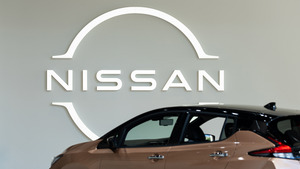
Nissan starts developing all-solid-state battery cheaper than China\'s, using sulfur-based materials to cut costs
Nissan is moving to secure price competitiveness for all-solid-state batteries, a key next-generation EV technology, by using sulfur-based materials instead of costly nickel and cobalt. The company is launching a three-year project with UK battery firm Gelion, Nissan Technical Centre Europe and the University of Oxford to develop cost-effective solid-state lithium-sulfur batteries. The project totals about 3.4 million pounds, with Gelion receiving 2.4 million pounds in UK government support.
Industry
Hepatitis D virus genome successfully encoded on quantum computer for first time
A full genome has been loaded onto a quantum computer for the first time, opening an early-stage test of whether quantum computing can handle large-scale genomic analysis. A joint team from the Wellcome Sanger Institute and the universities of Oxford, Cambridge and Melbourne encoded the hepatitis D virus genome, about 1,700 base pairs, onto IBM\'s 156-qubit Heron processor. The work focuses on compressing genetic information into quantum states and is seen as a proof of concept.